
REVIEW · USA
Chicago Lincoln Park Indoor Skydiving with Two Flights
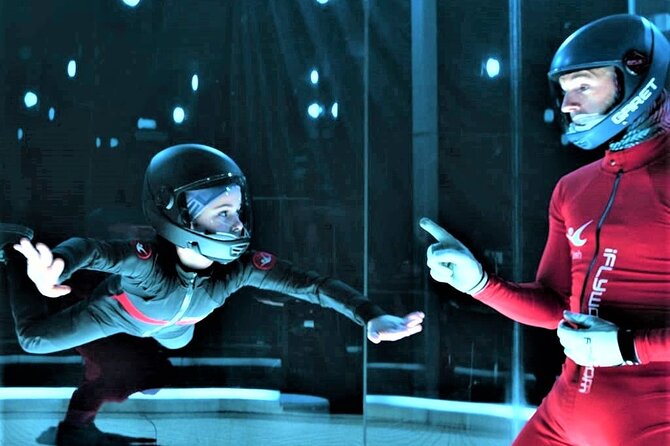
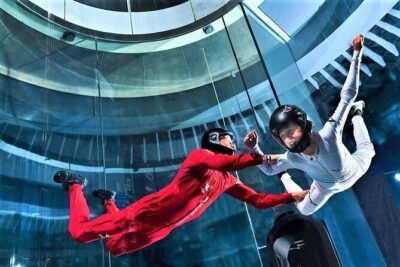
Chicago’s Lincoln Park indoor flight experience replaces the airplane, parachute, and frightening leap with a 1,400-horsepower vertical wind tunnel. You step into a glass chamber, let the air rise beneath you, and learn to hold your body steady as wind reaches about 180 miles per hour. It feels less like falling and more like being held up by a powerful, steady river of air.
I like two things right away. First, you receive real, one-on-one help inside the chamber, not just a quick safety talk from the sidelines. Second, two 60-second flights give you a chance to correct your body position and improve on the second attempt. The catch is price: at $136.25 per person, you are paying a premium for only two minutes of actual flight time.
- Two one-minute flights: Your second flight usually feels more controlled because you have already learned the basic body position.
- Personal coaching in the chamber: Your instructor can physically guide you and help adjust your arms, legs, and balance.
- Up to 12 people per session: You fly one at a time, while your group watches from the observation area.
- High flights may be available: Ask your instructor about going higher once you are comfortable with the basic position.
- Ages three and up: There is no stated upper age limit, though health and weight rules apply.
- A certificate at the end: You leave with a personalized record of what you accomplished.
What the Lincoln Park wind tunnel actually feels like
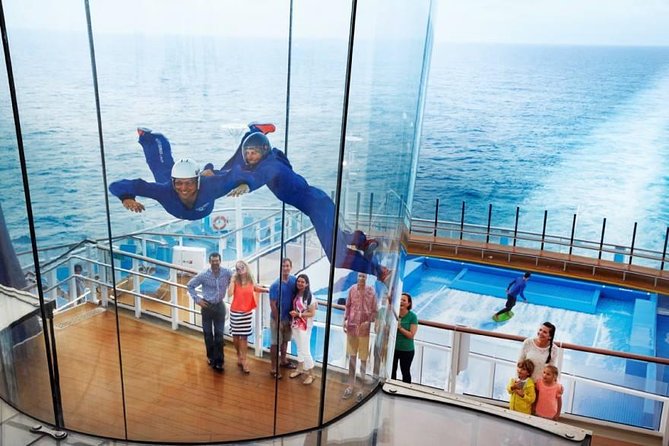
The first thing to understand is that this is not a jump from an aircraft. There is no height, parachute, sudden drop, or stomach-lurching sensation. You walk into a chamber at ground level and float on a column of air.
That makes the activity a good fit if you have always wondered about freefall but do not want the fear of stepping out of a plane. It also makes the experience different from outdoor parachuting. You will not get the rush of looking down from high above Chicago, and you will not feel the same force as a real aircraft exit.
The tunnel works by moving air through a closed system. Fans pull air upward through the chamber and send it back down around the sides. The air is compressed, sped up, and returned to the flight area in a smooth vertical stream.
Inside the chamber, your body position matters. Keep your arms bent, legs slightly apart, and hips raised in the basic flying posture. Small movements can send you forward, backward, or sideways, so your instructor gives constant signals and corrections.
From check-in to flight suit
The activity begins at 800 W Scott Street in Chicago’s Lincoln Park area. Arrive 10 to 15 minutes early. The session starts promptly, and arriving late can cause real trouble. One customer who arrived 15 minutes late because of traffic missed the activity and could not easily reschedule because of a long drive home.
At check-in, you complete the required paperwork and receive flight gear. Wear comfortable clothing under the suit, ideally pants and a shirt without a collar. Lace-up sneakers or running shoes are the best choice.
Remove watches, rings, necklaces, bracelets, earrings, and loose hair accessories. Empty your pockets. Lockers are available, but I would leave valuable items at your hotel rather than bringing them to the facility.
If you wear glasses, larger goggles are available to fit over them. Long hair should be braided and tied in a low bun. These small clothing details matter because the air is strong, and anything loose can flap around or become uncomfortable.
More Indoor Skydiving in the USA
The safety lesson is short but useful
Before flying, you attend a required training session. Your instructor explains hand signals, body position, how to enter the chamber, and how to respond if you lose balance.
You also practice the basic position before stepping into the air stream. This is not filler. A few minutes of rehearsal makes it easier to listen to the instructor once the wind is roaring around your helmet.
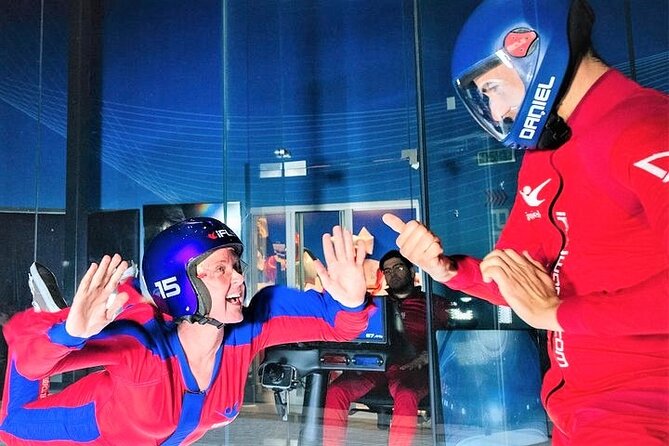
The flight suit has handles that instructors can use if they need to steady or guide you. Certified instructors remain with you in the chamber. Another instructor may stand outside, demonstrating the hand signals and body adjustments you need.
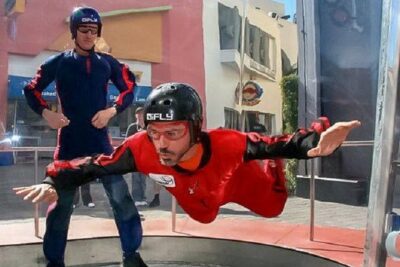
The facility can accommodate a maximum of 12 people in a session. You do not all fly together. Each person enters one at a time with an instructor, while the rest of the group watches. That arrangement keeps the flight personal, though it also means your total visit includes waiting and observation time.
Your first 60-second flight
When your turn comes, you enter the chamber with the instructor. The operator gradually adjusts the airflow until it is strong enough to support your body. The target speed can reach about 180 miles per hour, but the important point is not the number. It is the smoothness of the air beneath you.
Your first few seconds may feel awkward. Most beginners tend to lift their head, bend their knees too much, or raise their arms too high. The instructor helps correct these habits with hand signals and direct guidance.
You are not left to figure it out alone. An instructor can hold the handles on your suit, adjust your position, and help you stay centered. Staff outside the chamber also show you what to change.
Breathing is not a problem. The air feels like sticking your head out of a moving car window, and you can breathe through your nose or mouth. The goggles and helmet help protect your face and eyes from the strong airflow.
Your first flight lasts 60 seconds. That may sound brief, but holding a stable position while processing signals and controlling your limbs takes concentration. It is enough time to understand the basic feeling, though probably not enough time to master it.
The second flight is where the activity makes sense
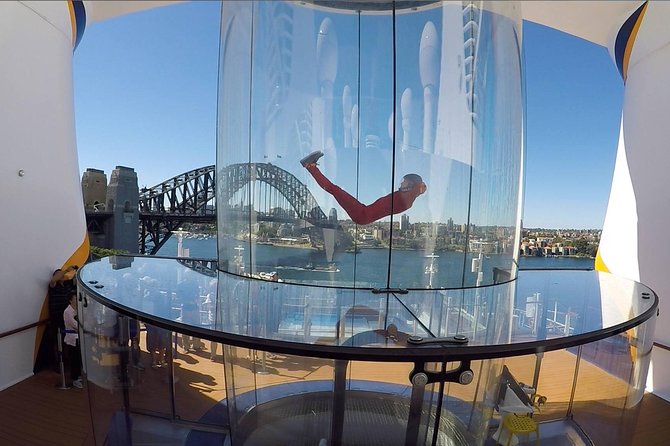
After your first turn, you return to the waiting area and prepare for the second flight. This is the useful part of booking two flights rather than one. You already know how the chamber feels, so you can spend more of the second minute working on control.
You may learn to stay up without assistance, make a left or right turn, or move more confidently around the chamber. Your exact progress depends on your comfort, body control, and the instructor’s judgment.
Some participants can manage turns on their first visit. Flips and more advanced tricks are reserved for experienced flyers, so do not expect a full acrobatic routine during a beginner session.
Ask about a high flight if you are comfortable and your instructor approves. This sends you higher in the chamber and gives you a different view of the flight space. It is not included as a separate promise in every booking, so treat it as something to discuss with the crew rather than something guaranteed.
The second flight may feel more fun and less tense than the first. You have learned that the air will support you, and you can focus on making small movements instead of simply trying to stay upright.
Same sky, a different way down:
- Atlanta Indoor Skydiving Experience with 2 Flights & Personalized Certificate
★ 4.5 · 68 reviews - Fort Lauderdale Indoor Skydiving with 2 Flights & Personalized Certificate
★ 4.5 · 57 reviews - Phoenix Indoor Skydiving Experience with 2 Flights & Personalized Certificate
★ 4.5 · 55 reviews - Charlotte Indoor Skydiving Experience with 2 Flights & Personalized Certificate
★ 4.0 · 46 reviews
The staff can make or break the visit
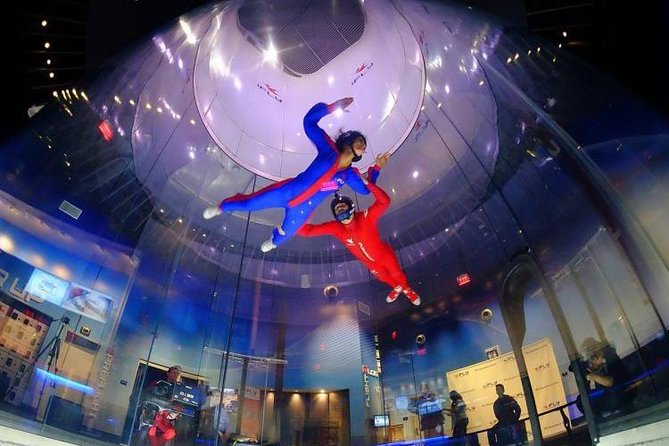
The strongest part of this activity is the human instruction. Names praised in feedback include Joe at the front desk, instructors Tommy, Vinny, JJ, Mark, and staff members Hannah, David, and Jocelyn.
The repeated pattern is clear: friendly explanations, patient corrections, and an effort to help nervous first-timers relax. That matters here because a good instructor can turn a clumsy first few seconds into a small success.
Do not expect the same instructor names on every date. Staffing changes, and the booking information does not assign a particular person. Still, the location has a strong record of positive comments about its crew, which is worth considering when you compare indoor flight facilities.
The staff also seem to handle mixed groups well. A parent and teenager can participate together, an older relative can watch or fly, and a nervous beginner does not need to pretend to be athletic.
The certificate is a small but worthwhile finish
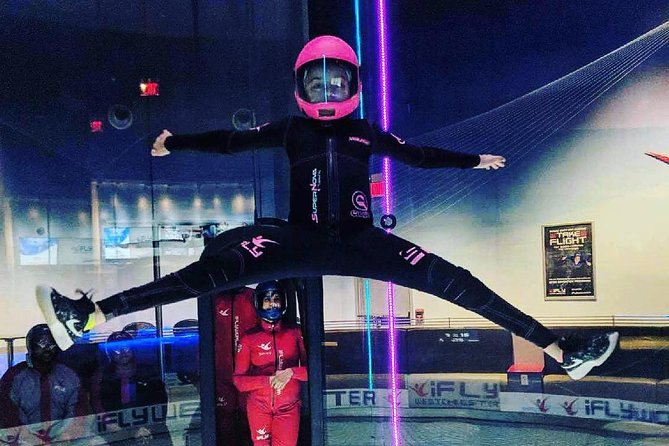
After both flights, you receive a personalized certificate of achievement. It may record skills such as staying airborne without assistance or completing turns.
This is not a major souvenir, but it gives the activity a clear finish. You have something physical to take home, especially useful if you are booking the session for a birthday, family outing, or first attempt at indoor flight.
The facility allows friends and family to watch from the observation area even if they do not participate. That makes the outing more flexible. A relative who cannot fly because of a health issue can still be part of the visit.
Price and value at $136.25
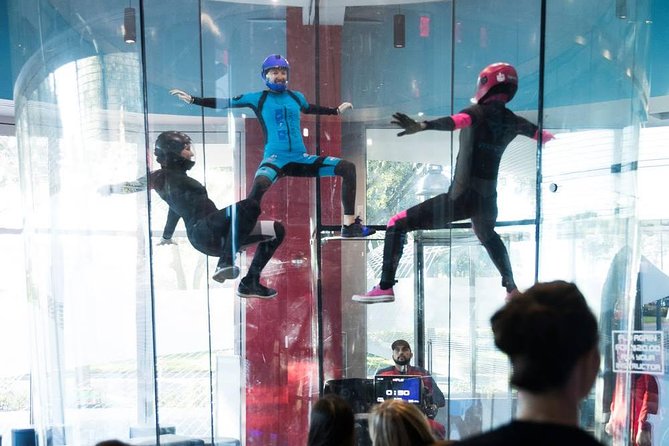
At $136.25 per person, this is an expensive short activity. The full visit lasts about 75 minutes according to the booking details, while the first-time flyer process is also described as taking roughly 90 minutes from start to finish. In practical terms, allow 75 to 90 minutes rather than planning a tight connection afterward.
Your actual flight time is two minutes total. The rest covers check-in, training, gear, waiting, coaching, and the certificate. If you judge value by minutes in the air, the price will feel high.
I think the price makes more sense for a special occasion or a first attempt at indoor flight than for a casual repeat visit. The instruction, equipment, and controlled setting are what you are paying for. This is not a cheap carnival ride, but it also does not offer a long session.
Some customers have bought extra flights at the facility for later use. Ask about current options if you know you want more time. Do not assume extra flights will be available that same day, since the schedule may already be full.
It is also sensible to compare the direct iFLY price with the price shown through a booking platform. Feedback has raised concerns about third-party markups and reservation errors. Confirm that your reservation is actually held by the facility, especially if your Chicago schedule is tight.
Health rules you need to check first
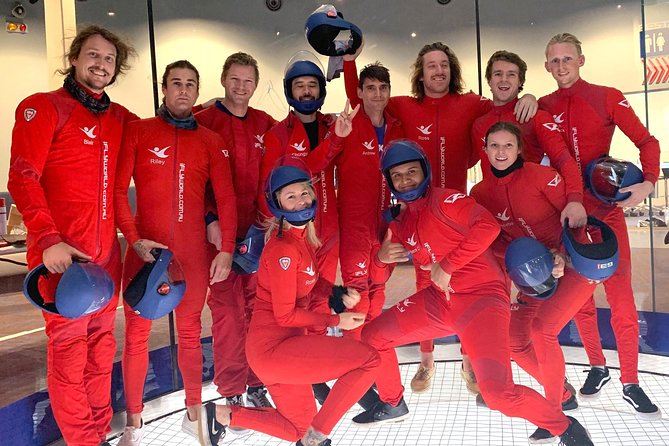
The basic minimum age is three, and there is no stated upper age limit. Anyone under 18 needs a parent or guardian to sign the waiver.
You cannot fly if you are pregnant, wearing a hard cast, or have certain medical concerns. The restrictions include previous neck or back problems, heart conditions, injuries, or shoulder dislocations.
Weight limits are important. People over 300 pounds cannot participate. Those between 260 and 300 pounds may need an additional evaluation at check-in, and the facility may apply extra restrictions.
There are no height restrictions. If you have physical or cognitive challenges, contact the Lincoln Park location ahead of time and request a certified instructor for an All Abilities session.
These rules are not minor paperwork. Check them before paying, since a health restriction discovered at arrival can spoil the day.
Who will enjoy this most
I would recommend this to families with older children, couples seeking an unusual Chicago activity, and people curious about real parachuting who want a gentler introduction.
It works especially well for a parent and teenager. A 15-year-old and parent can share the experience, compare their second-flight progress, and watch each other from the viewing area.
It also suits someone who wants a physical activity without a height-based thrill. You will use your core, legs, and arms, but you do not need previous athletic or flight experience.
I would be more cautious about recommending it to someone expecting a strong adrenaline rush. The air feels powerful, but there is no falling sensation, zero gravity, or G-force. If your idea of excitement is a fairground thrill ride or real parachuting, this may feel controlled rather than wild.
Booking and cancellation details
The activity is offered in English and uses a mobile ticket. Free cancellation is available if you cancel at least 24 hours before the scheduled start time.
Changes or cancellations made less than 24 hours before the start are not accepted for a refund. If you need to reschedule after booking, call the Lincoln Park location directly. Date and time changes cannot be handled through another method.
Plan your route carefully. Chicago traffic can be unpredictable, and arriving late may mean losing the session even if the facility is otherwise operating normally.
Should you book the two-flight session?
Book it if you want a safe, coached introduction to indoor flight and like the idea of improving during a second attempt. The instructors, clear training, young minimum age, and certificate make it a strong pick for families and first-timers.
Skip it if you need a long activity for the money or want the fear and force of actual outdoor parachuting. At $136.25, two minutes of flight is not a bargain. But if you treat it as a special Lincoln Park outing rather than a full-day attraction, the second flight, personal coaching, and chance to learn turns make the cost easier to accept.
FAQ
Where does the Chicago Lincoln Park indoor flight experience begin?
It begins at 800 W Scott St, Chicago, Illinois 60610. The activity ends back at the same meeting point.
How long does the activity take?
Plan on approximately 75 to 90 minutes from arrival through the certificate. The booking information gives an approximate duration of 1 hour 15 minutes, while the first-time flyer process is also described as taking about 1 hour 30 minutes.
How long is each flight?
Each flight inside the wind tunnel lasts 60 seconds. The two-flight package provides two minutes of total flight time.
Do I fly alone or with a group?
You take part in a group of up to 12 people, but you fly one at a time in the chamber with your instructor. Friends and family can watch from the observation area.
Do I need previous flight experience?
No. First-time flyers receive a safety briefing, training, and practice before entering the chamber.
What should I wear?
Wear comfortable clothes, preferably pants and a shirt without a collar. Use well-fitting lace-up sneakers or running shoes. Long hair should be braided and tied in a low bun.
Can I wear glasses?
Yes. Larger goggles are available to fit over eyeglasses.
What health restrictions apply?
You cannot fly if you are pregnant, wearing a hard cast, or have certain previous neck, back, heart, shoulder, or injury concerns. Contact the facility if you need an All Abilities instructor.
Are there weight limits?
You must weigh less than 300 pounds. People between 260 and 300 pounds require an additional evaluation at check-in, and extra restrictions may apply.
What is the minimum age?
Children can fly from age three. Anyone under 18 must have a parent or guardian sign the waiver.
Can I perform flips or tricks?
Advanced tricks and flips are intended for experienced flyers. Beginners may learn turns or controlled movement if the instructor decides they are ready.
How early should I arrive?
Arrive 10 to 15 minutes before your scheduled time. The session begins promptly, and late arrival can prevent you from flying.
Newest jumps around the USA
- Austin iFLY Skydiving Simulator with Instructor and Gear★ 4.7 · 4 reviews
- Minneapolis Indoor Skydiving Admission with 2 Flights & Personalized Certificate★ 4.5 · 23 reviews
- Chicago-Rosemont Indoor Skydiving with Two Flights★ 4.5 · 31 reviews
- Denver Indoor Skydiving Experience with 2 Flights & Personalized Certificate★ 5.0 · 29 reviews
- Houston Memorial Indoor Skydiving with 2 Flights & Personalized Certificate★ 4.0 · 29 reviews
- Tandem Skydiving with GoJump in Hawaii★ 4.5 · 28 reviews
- Kansas City Indoor Skydiving Admission with 2 Flights & Personalized Certificate★ 4.5 · 29 reviews
- San Diego Indoor Skydiving Experience with 2 Flights & Personalized Certificate★ 4.0 · 29 reviews
Indoor Skydiving in the USA, side by side.
Orlando Indoor Skydiving Experience with 2 Flights & Personalized Certificate
Read our review →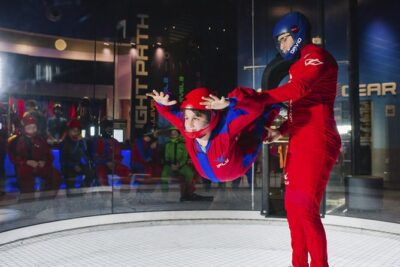
Kansas City Indoor Skydiving Admission with 2 Flights & Personalized Certificate
Read our review →Lists this jump appears in