
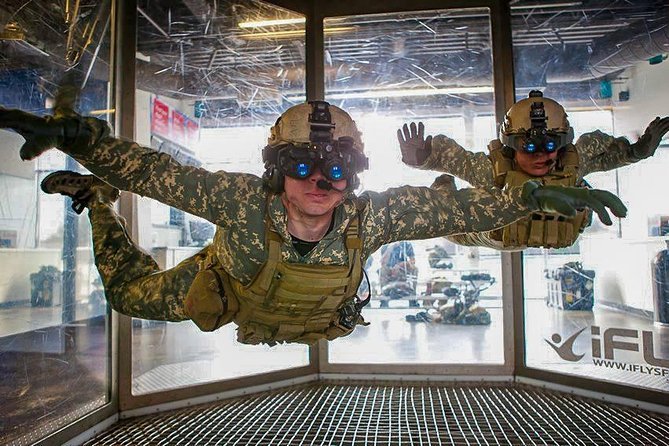
REVIEW · USA
Oceanside Indoor Skydiving Experience with 2 Flights & Personalized Certificate
The striking part of iFLY Oceanside is that you can experience the body position and rush of a parachute jump without stepping onto an aircraft. You float on a smooth column of air reaching 130 to 175 mph, with a certified instructor beside you in the chamber.
I like the one-on-one instruction and the fact that two separate flights give you a chance to fix your body position after the first attempt. I also like the family-friendly age range, since children as young as three can participate. The main consideration is that 60 seconds goes quickly, and keeping your body stable may be harder than the relaxed smiles in the photos suggest.
Key points to know before you fly
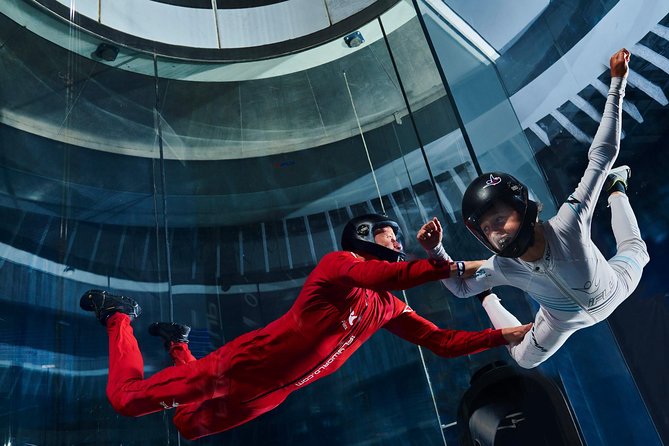
- Two 60-second flights: You fly twice, one person at a time, with your instructor.
- No airplane required: The tunnel creates a steady vertical cushion of air from below.
- Training and equipment included: You receive instruction, a flight suit, helmet, goggles, and other required gear.
- Ages three and up: There is no stated upper age limit, but you need suitable physical condition.
- Good for families and groups: Friends and relatives may watch from the observation area.
- Bring the right shoes: Wear comfortable clothes and well-fitting, lace-up sneakers or running shoes.
The wind tunnel gives you the thrill without the airplane
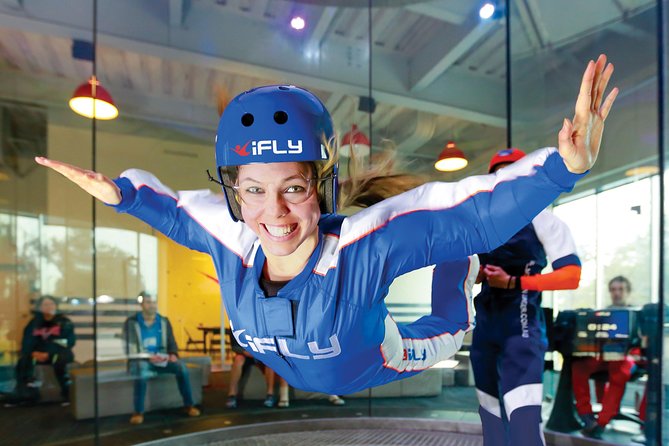
At iFLY Oceanside, the main attraction is a tall, enclosed flight chamber. Powerful fans move air through the system, compress it, and send it upward through the center. The result is a stable column of air strong enough to support your body.
This is not a ride where you sit back and let machinery do all the work. You must hold a particular body position, keep your arms and legs in the right place, and respond to your instructor’s hand signals. The air does the lifting, but your body control determines how smoothly you fly.
That makes the session more interesting than a simple amusement-park thrill. You are learning a small, real skill. Professional parachutists use wind tunnels for practice, and the same basic setup lets a first-time flyer get a taste of body flight in a controlled setting.
You will not feel as if you are falling. The airflow supports you from below, and the walls of the chamber keep you from drifting away from the air column. You may feel strong wind on your face, much like putting your head near a moving car window, but breathing is not considered difficult. You can breathe normally through your nose or mouth.
More Indoor Skydiving in the USA
Arrive early and expect a full 75 to 90 minutes
The listed duration is about 1 hour and 15 minutes, while the first-time flyer information allows about 1 hour and 30 minutes from start to finish. I would plan on the longer figure. Your actual flight time totals only two minutes, but check-in, training, changing, equipment fitting, group rotation, and instructor demonstrations fill out the session.
The meeting point is iFLY Oceanside at 3178 Vista Way in Oceanside, California. The booking is mobile, and confirmation is provided at the time of booking. Arrive 10 to 15 minutes early. A late arrival could be a real problem because sessions run on a set schedule and your training begins promptly.
There is no hotel pickup, drop-off, food, or drink included. Plan your own transportation and arrive ready to take part. Since the activity ends at the same location, it is easy to fit into a day around Carlsbad and Oceanside if you allow enough time.
Group size can vary. The experience information describes sessions of up to six people, while the practical guidance says a group generally includes up to 12 flyers. The maximum listed group size is 15. Either way, you do not all fly together in the chamber. Your group takes turns, and your own flight is one-on-one with the instructor.
That rotation is worth understanding. You may spend some of the session watching other people fly, but this is useful time. You can see how small changes in arm or leg position affect control before you take your turn. Friends and family who do not fly can watch from the observation area.
Training comes first, and it matters
Before you enter the chamber, an expert flight instructor explains the basic position and safety rules. You practice the posture on the ground, learn the signals used inside the tunnel, and get a sense of how the instructor will guide you.
First-time flyers must take this class. It is not filler. The air pressure makes simple movements surprisingly powerful, and a clear understanding of the signals helps you stay calm once the fans start.
You will be told how to position your head, arms, hips, and legs. The goal is to create a stable shape that lets the air support you evenly. Your instructor can adjust your posture, hold the handles of your flight suit, and help keep you centered.
The training also explains what not to bring into the chamber. Remove watches, jewelry, necklaces, bracelets, rings, loose hair accessories, and anything else that could come loose or flap around. Empty your pockets. Lockers are available, but leaving valuables at home is the simpler plan.
Wear casual clothes under the suit, ideally pants and a shirt without a collar. Lace-up sneakers or running shoes are recommended. Long hair should be braided and tied in a low bun. Glasses are allowed, with larger goggles available to fit over them.
Two short flights are better than one long first attempt
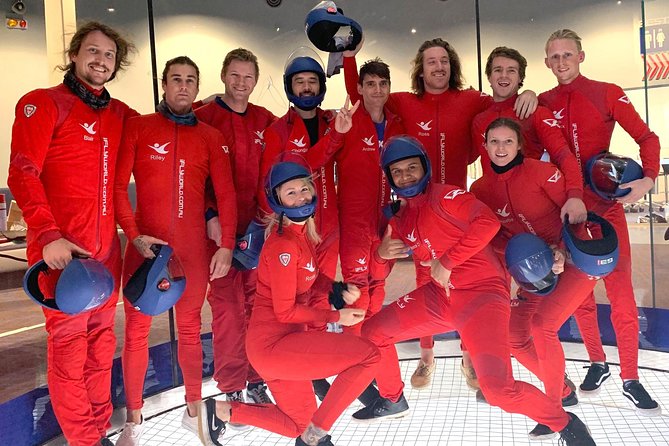
Each flight lasts 60 seconds. That sounds brief, but the wind makes those seconds busy. Your first flight is mostly about learning to stay stable and following the instructor’s corrections.
The instructor enters the chamber with you and gradually increases the wind until you are airborne. You are not strapped to the instructor, and you do not jump from a platform. Instead, you lie face-down on the rising air, with the instructor close enough to guide your movement.
The second flight is where the format pays off. You have already felt the force of the air and learned what your body needs to do. You can use the instructor’s advice from the first round and try to hold your position with more control.
Do not expect to float perfectly on your own right away. One of the clearest lessons from the available feedback is that the activity can be harder than expected. A participant who enjoyed watching Navy SEAL training still found the basic flight difficult and hoped to improve on a return visit.
That is not a flaw in the experience. It is a useful warning about expectations. The instructor may support you for much of your first session, and that is normal. The aim is safe control, not an instant professional performance.
Same sky, a different way down:
- Atlanta Indoor Skydiving Experience with 2 Flights & Personalized Certificate
★ 4.5 · 68 reviews - Chicago Lincoln Park Indoor Skydiving with Two Flights
★ 4.5 · 67 reviews - Fort Lauderdale Indoor Skydiving with 2 Flights & Personalized Certificate
★ 4.5 · 57 reviews - Phoenix Indoor Skydiving Experience with 2 Flights & Personalized Certificate
★ 4.5 · 55 reviews
The instructor makes the difference
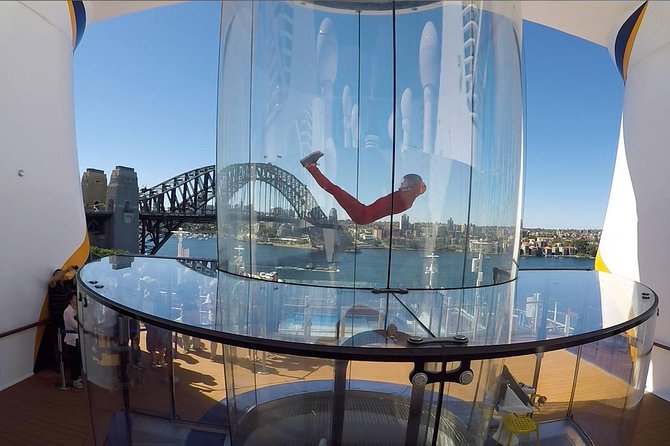
The staff receives especially strong praise for being friendly, encouraging, and clear. That matters here because your first few seconds in the air can feel awkward. A calm instructor turns the session from a test of nerves into a manageable lesson.
Andrew is specifically singled out as an excellent instructor. Other feedback also highlights patience, encouragement, and clear explanations. The final instructor performance is another popular part of the session, with experienced staff showing what the tunnel can do when someone has full control.
You may see turns, higher movement, or other advanced maneuvers during the demonstration. First-time flyers should not assume they will perform the same tricks. Flips and more complex movements are for experienced flyers, and your instructor will tell you when it is safe to try a new skill.
A small extra charge may be offered for a higher flight toward the top of the tunnel. One participant paid an additional $20 for that option and noted that the standard flight stayed only about three to five feet above the floor. Ask about the current upgrade price and what it includes before paying. The basic package does not promise a high-flight session.
What $120 buys you
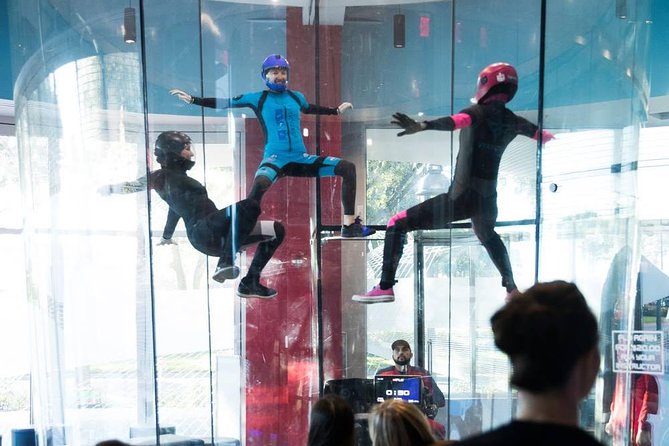
The price is $120 per person. That includes two flights, training, use of the required gear, one-on-one instructor guidance, a personalized flight certificate, and taxes, fees, and handling charges.
The value depends on what you want. If you are comparing the price with a full parachute jump, indoor flight costs much less and removes the aircraft, altitude, and outdoor conditions. You also get two attempts rather than putting all your hopes into one brief jump from a plane.
On the other hand, your total time in the air is only two minutes. If you count only flight time, $120 may feel steep. The rest of the session provides instruction, equipment, group coordination, and a supervised introduction to a sport that requires real body control.
I think the price makes the most sense for a birthday, family outing, vacation activity, or first taste of body flight. It is also a practical choice if one person in your group wants the thrill but does not want to commit to a traditional jump.
The certificate gives you a physical reminder of the session, though it is not a substitute for more flight time. If you enjoy the first two flights, you may want to ask about return-flight offers. One young flyer’s family purchased a return pass at half price that did not expire, but promotions can change, so confirm the current terms on the day.
Who should book this experience
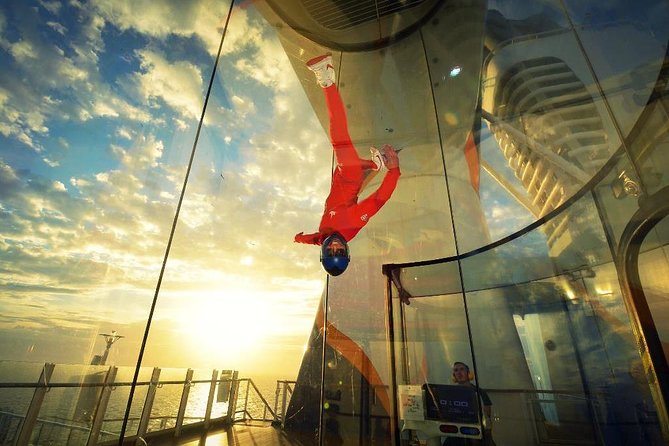
This is a strong pick for families with children old enough to follow instructions. The minimum age is three, and there is no stated upper age limit. Children under 18 need a parent or guardian to sign the waiver.
It also works well for mixed groups. Someone who flies can take part while others watch from the observation area. Since the actual flight is one person at a time, the group format lets everyone share the anticipation and watch each attempt.
You need a moderate level of physical fitness. The experience is not described as a strenuous workout, but you must hold your body in position, respond to instructions, and handle strong airflow. Anyone with neck, back, heart, shoulder dislocation, or other relevant injuries cannot fly. Pregnant participants and anyone wearing a hard cast cannot participate.
The weight limit is under 300 pounds. If you weigh between 260 and 300 pounds, tell the instructor in advance and note it in the special requirements area when booking. There is no height restriction.
A good choice for nervous first-time flyers
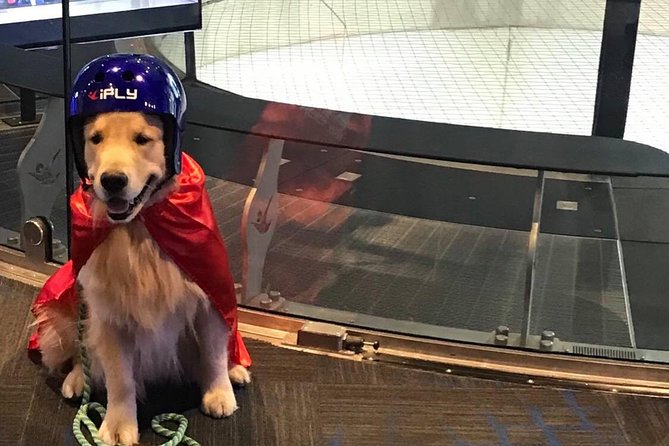
People often worry that indoor flight will feel like falling. It generally does not. There is no aircraft door, no leap, and no sensation of dropping through open air. You enter the chamber at floor level and rise on the air column under your body.
That said, the first few seconds can still feel intense. The wind is loud and forceful, and your body may not respond exactly as you expect. The instructor stays with you throughout the flight, which is the key safety feature for a beginner.
The wall-to-wall airflow is another practical advantage. You do not need to aim for a narrow stream or worry about missing the air. The chamber’s design keeps the support beneath you, while the instructor helps control your position.
If you are nervous, focus on the training rather than the height. Listen for the instructor’s signals, keep your breathing steady, and treat the first flight as practice. The second flight is your chance to feel less busy and more in control.
Certificate, photos, and the memory of the day
The personalized flight certificate is included, which makes the activity work well as a gift. It records the achievement and gives younger flyers something tangible to take home.
Photos and video may also be available through the facility, but they are not listed as part of the package. One family enjoyed having images that captured a teenager’s flight, so ask about current photo and video options if recording the moment matters to you.
The setting is also entertaining for spectators. You can watch the instructor work with each flyer, see how different body types respond to the air, and observe advanced demonstrations. The final instructor performance can be the most polished part of the session, especially after you have felt how demanding basic control can be.
Practical limits and booking advice
The experience is non-refundable and cannot be changed after booking. Check the date, participant names, health restrictions, and weight information carefully before you pay.
Bring your mobile confirmation, arrive early, and wear proper shoes. Do not arrive with loose jewelry, a watch, full pockets, or a hairstyle that cannot be secured. These small details can slow check-in or require last-minute changes.
Service animals are allowed. Children need a parent or guardian for the waiver, and all first-time flyers must take the training session.
Should you book iFLY Oceanside?
Book it if you want a safe, supervised taste of body flight, especially for a family celebration, birthday, or group outing. The two-flight format, patient instructors, broad age range, and included certificate give the $120 price a reasonable purpose.
Skip it if you want long, independent flight time or expect to perform advanced tricks on your first visit. The flights are short, and many beginners need substantial instructor help to stay stable.
My practical advice is to see this as a hands-on lesson with a thrill attached, not a two-minute substitute for a full outdoor jump. Arrive open to learning, budget extra time, and ask about the higher-flight option or return passes only after you understand what the standard package includes.
FAQ
How long does the Oceanside indoor flight experience take?
Plan on about 75 to 90 minutes from arrival through the end of the session. Each of your two flights lasts 60 seconds, with training, equipment fitting, and group rotation taking up the remaining time.
How many flights are included?
The package includes two flights for one person. Each flight is one minute long and takes place one-on-one with a certified instructor.
How early should I arrive?
Arrive 10 to 15 minutes before your scheduled reservation. The session starts promptly, so arriving early gives you time to check in and prepare.
What should I wear?
Wear comfortable casual clothes, preferably pants and a shirt without a collar. Bring well-fitting, lace-up sneakers or running shoes. Long hair should be braided and secured in a low bun.
Is there a minimum age or weight limit?
Children may fly from age three, and there is no stated upper age limit. Participants must weigh less than 300 pounds. Anyone between 260 and 300 pounds must advise the instructor in advance.
Can friends and family watch?
Yes. Non-participants may accompany you and watch from the observation area. Children under 18 who fly need a parent or guardian to sign the waiver.
Newest jumps around the USA
- San Francisco Indoor Skydiving with 2 Flights & Personalized Certificate★ 5.0 · 11 reviews
- Sacramento Indoor Skydiving Experience with 2 Flights & Personalized Certificate★ 4.5 · 20 reviews
- Seattle Indoor Skydiving Experience with 2 Flights & Personalized Certificate★ 3.5 · 21 reviews
- Portland Indoor Skydiving Experience with 2 Flights & Personalized Certificate★ 4.5 · 12 reviews
- New York Queens Indoor Skydiving Experience With 2 Flights★ 5.0 · 4 reviews
- Westchester Indoor Skydiving Admission with 2 Flights & Personalized Certificate★ 4.0 · 16 reviews
- Paramus Indoor Skydiving Experience with 2 Flights & Personalized Certificate★ 4.5 · 16 reviews
- Loudoun Indoor Skydiving Experience with 2 Flights & Personalized Certificate★ 4.0 · 17 reviews
Indoor Skydiving in the USA, side by side.
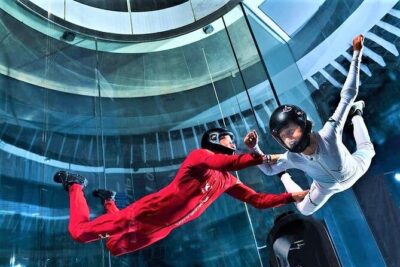
Orlando Indoor Skydiving Experience with 2 Flights & Personalized Certificate
Read our review →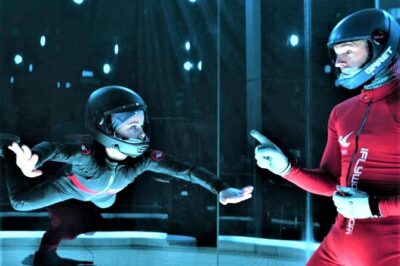
Chicago Lincoln Park Indoor Skydiving with Two Flights
Read our review →
Lists this jump appears in