REVIEW · NEW ZEALAND
Auckland: 13000, 16000, or 18000-Foot Tandem Skydive
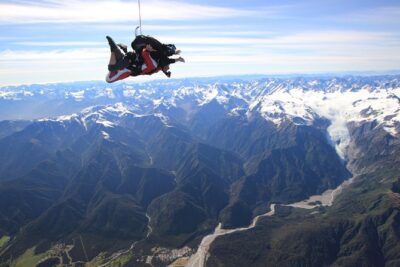
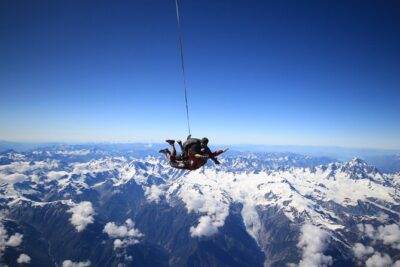
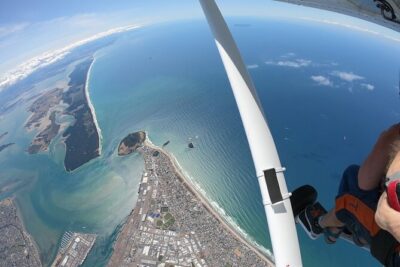
The best part of this Auckland adventure comes before your feet leave the plane. You climb above the clouds and coast, then step into a 75-second freefall at up to 200 km/h. From 18,000 feet, the view can stretch from New Zealand’s East Coast to its West Coast, with islands and distant mountains laid out below.
I like the choice of three heights, since you can match the price and freefall time to your nerves. I also like the calm, supportive staff, including instructors such as Owen, Aaron, Mitch, James, and Erin, who have helped first-timers relax. The main catch is weather: several jumps have been delayed for hours, and there is no food option at the site according to one recent account.
Key points at a glance
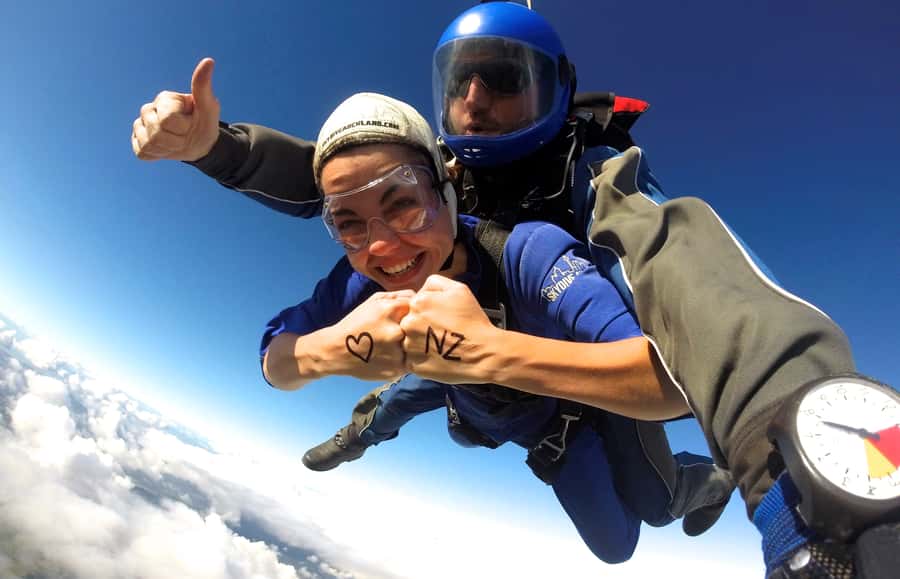
- Up to 75 seconds of freefall: Choose 18,000 feet for the longest time in the open air.
- Three altitude choices: The 13,000, 16,000, and 18,000-foot options let you control the cost and intensity.
- Views across both coasts: On a clear day, you may see Waiheke Island, Great Barrier Island, Mount Ruapehu, and Mount Taranaki.
- A 45-minute trip from central Auckland: The jump takes place at Skydive Auckland in Parakai, outside the city.
- Professional tandem instruction: You are attached to an English-speaking instructor who handles the equipment and landing.
- Photos and video cost extra: You can buy a personal media package on the day, with one recent account receiving the files within 15 minutes of landing.
From Auckland city to Parakai in 45 minutes
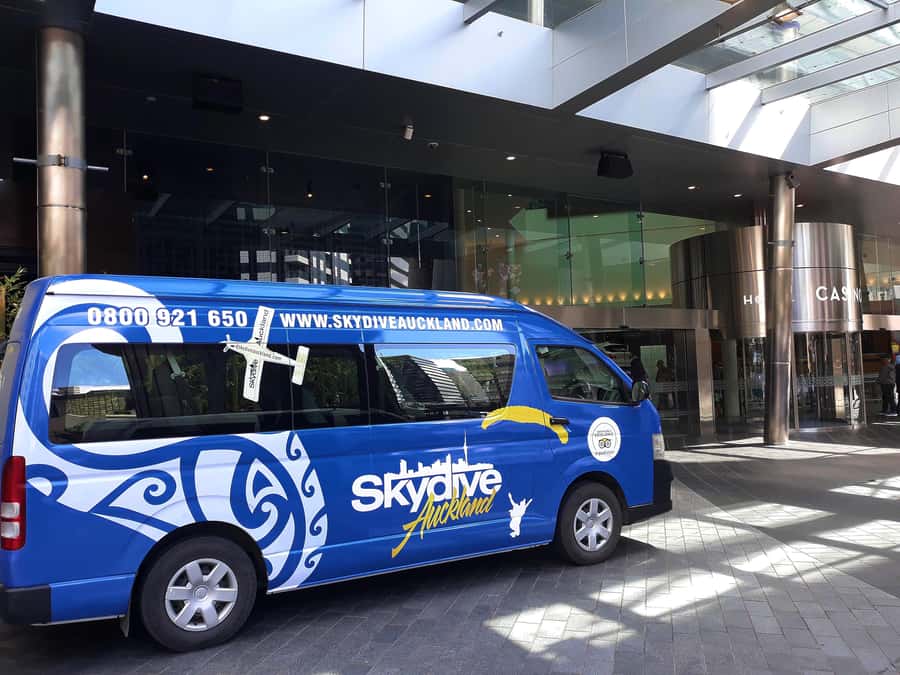
Skydive Auckland is based in Parakai, an easy drive of about 45 minutes from Auckland City. That distance matters when planning your day. This is not a quick city activity that fits neatly between museum visits and dinner. Set aside roughly three hours for the full appointment, and allow extra time if weather slows operations.
You meet at Skydive Auckland, where the team prepares you for the jump. The exact start time depends on availability, so check the schedule before booking. You will want comfortable clothing and closed shoes. Open-toed footwear is not allowed.
A support crew can come along. The viewing deck is positioned so friends and family can watch you land, which is a useful touch if you are jumping as part of a birthday, anniversary, or group trip. It also gives nervous companions something to do besides wait in the car park.
The site does not offer food options, based on one recent account. If you have an early booking or expect a weather delay, eat beforehand and bring water if permitted. A café was said to be under construction, but you should not count on that being open when you visit.
More High-Altitude Skydives in New Zealand
- 15,000ft Tandem Skydive in Tauranga – Bay of Plenty
★ 5.0 · 305 reviews - 15,000ft Tandem Skydive in Bay of Plenty
★ 5.0 · 180 reviews - Franz Josef: 13,000ft, 16,500ft or 18,000ft Skydive
★ 4.9 · 113 reviews
Choosing 13,000, 16,000, or 18,000 feet
The three altitude choices are not just different price points. They change the amount of time you spend in freefall and the scale of the view.
At 13,000 feet, you still get a serious tandem jump and the same basic sequence: aircraft ascent, freefall, parachute flight, and landing. This is a sensible choice if you want the experience without paying for the longest possible freefall. One account described the 13,000-foot option as unforgettable, even after a three-hour weather delay.
The 16,000-foot option gives you more time in freefall than the lowest choice. It may suit you if you want a fuller taste of the sensation but do not feel the need to choose the maximum height.
At 18,000 feet, you get the longest freefall, up to 75 seconds. That extra altitude also gives you more time to take in the broad view before the parachute opens. Several people specifically felt the highest option was worth it for the views and added time in the air.
The price listed for the activity is $206 per person, though the available amount can vary by selected option and booking conditions. The important detail is that photos and video are not included. If you know you will want a record of the jump, add that cost to your mental budget before you arrive.
The aircraft climb above Auckland
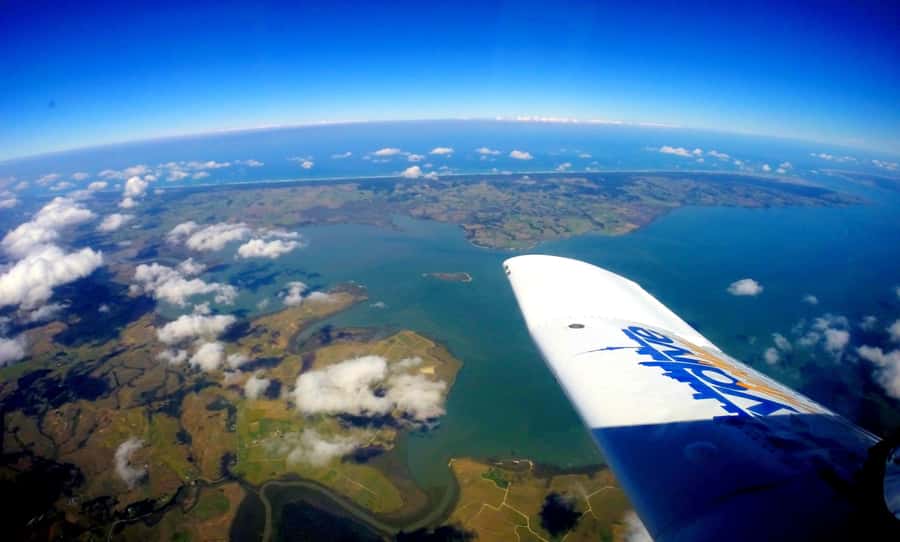
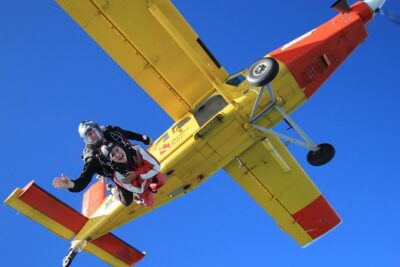
After your safety briefing and equipment fitting, you board the aircraft with your tandem instructor. The plane climbs to the altitude you selected: 13,000, 16,000, or 18,000 feet.
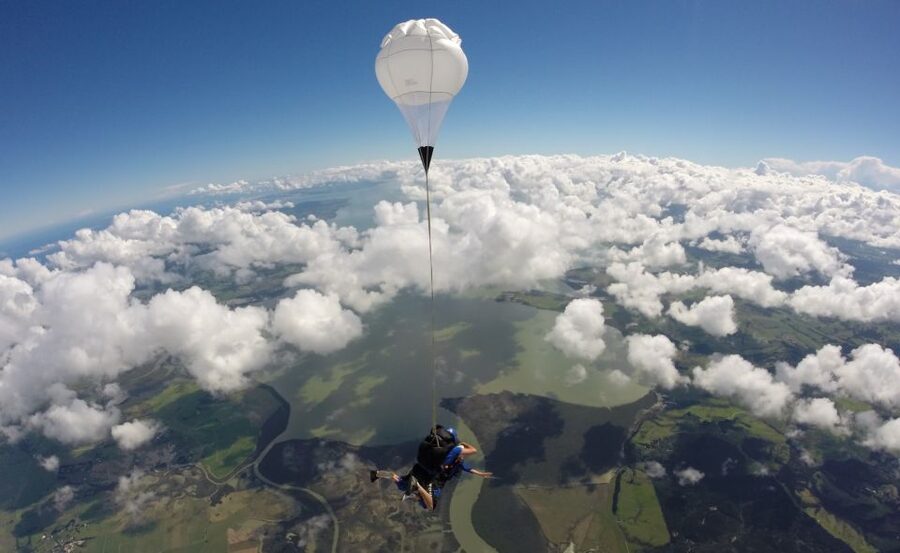
This ascent is a valuable part of the experience, not just a wait for the main event. You get a scenic view as Auckland and the surrounding coast shrink below you. On a clear day, the position gives you a chance to see both the East and West coastlines, along with islands such as Waiheke and Great Barrier.
The visibility can change quickly. A clear day may offer distant views toward Mount Ruapehu or Mount Taranaki, while cloud can cover parts of the scene. One person who jumped in winter described going through clouds with ice crystals hitting their face and temperatures below freezing inside the cloud. That is a useful reminder that the air can be cold and harsh at altitude, even when the weather feels mild on the ground.
You are attached to your tandem instructor throughout the jump. The staff provide the equipment and guide the process, so you are not expected to manage the technical side yourself. The instructors also appear to understand the emotional side of the activity. Names such as Owen, Aaron, Mitch, James, Erin, and Ballsy come up repeatedly in personal accounts, with particular praise for their calm manner and encouragement.
The door opens, and the freefall begins
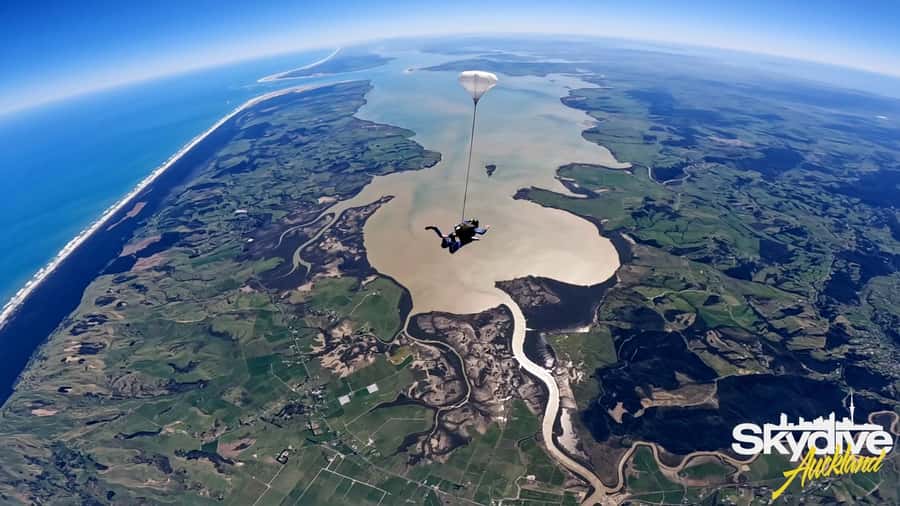
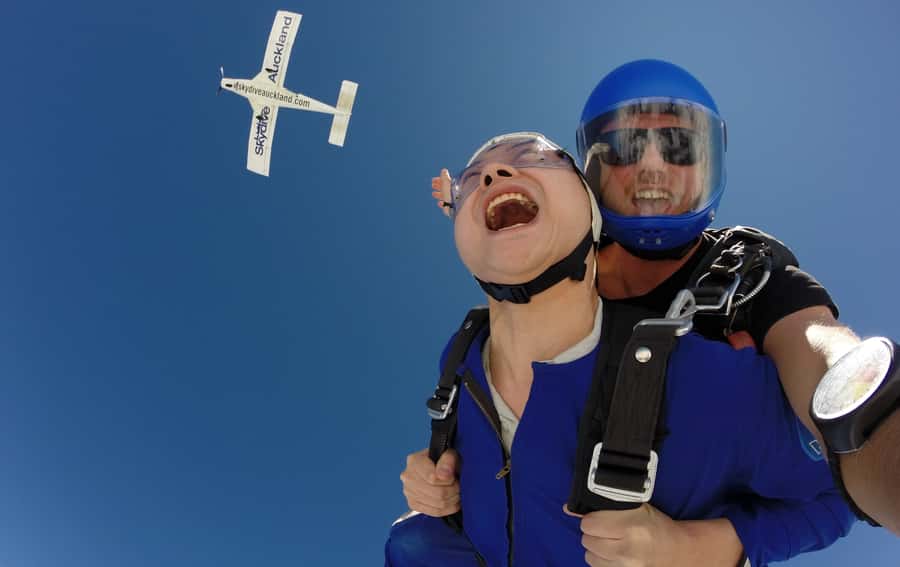
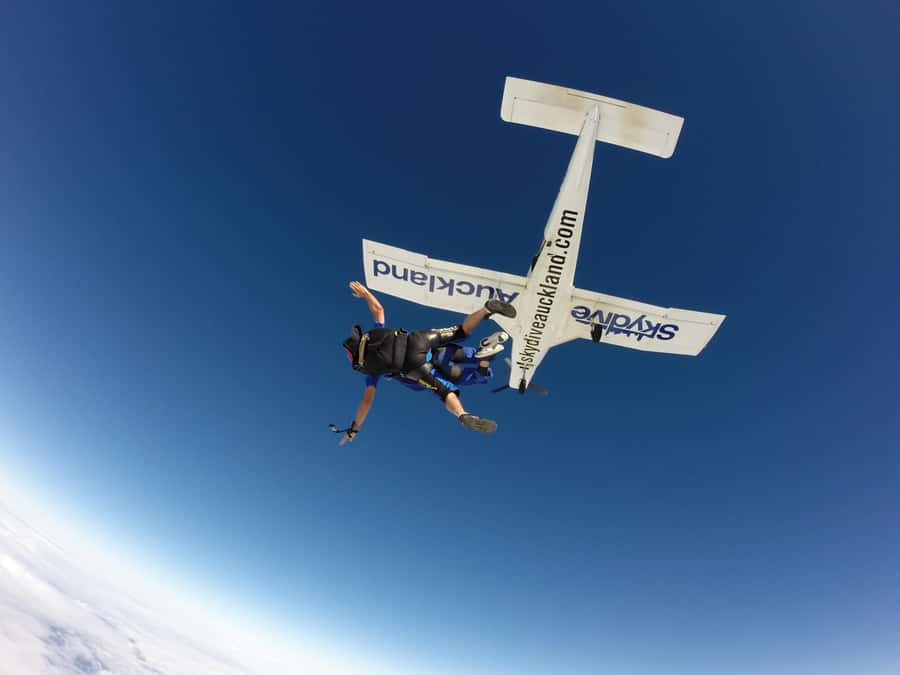
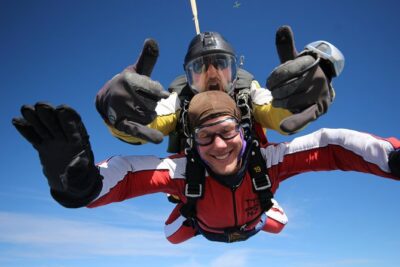
The most intense moment is simple: the aircraft door opens, and you move into the air with your instructor.
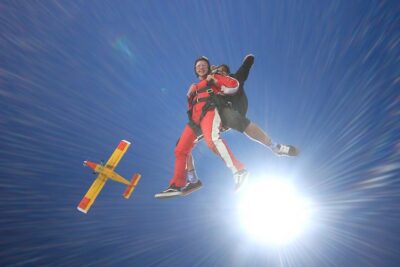
At the highest altitude, freefall can last up to 75 seconds. You reach speeds of up to 200 km/h, so the first moments are loud, cold, and fast. The sensation is less like gently floating and more like being pressed into the air while the ground rushes closer.
Your instructor manages the tandem position and the equipment. Some instructors add flips or other simple tricks, depending on conditions and the jump plan. Andrew, who jumped in January 2026, specifically recalled the crew finding time for flips and tricks while keeping the landing safe. These extras are not something you should assume every jump will include, but they may be offered when suitable.
The first-time nerves are real. Many people arrive unsure if they will actually enjoy the jump. The strongest pattern in the feedback is that the staff help settle those nerves through clear instruction, friendly conversation, and steady handling. That matters more here than a fancy sales pitch. You want an instructor who can keep you focused when the aircraft door opens.
The freefall is brief in clock time but large in memory. At 200 km/h, you do not have much time to study individual landmarks. Instead, you get a wide, fast impression of coast, sea, islands, cloud, and sky.
More Tandem Skydives in New Zealand
- Queenstown: Tandem Skydive Experience
★ 4.8 · 475 reviews - Lake Taupo 12,000-Foot Tandem Skydiving
★ 5.0 · 359 reviews - Tandem Skydive Experience in Taupo
★ 5.0 · 324 reviews - Wanaka: Tandem Skydive Experience
★ 4.8 · 252 reviews
The quieter parachute ride
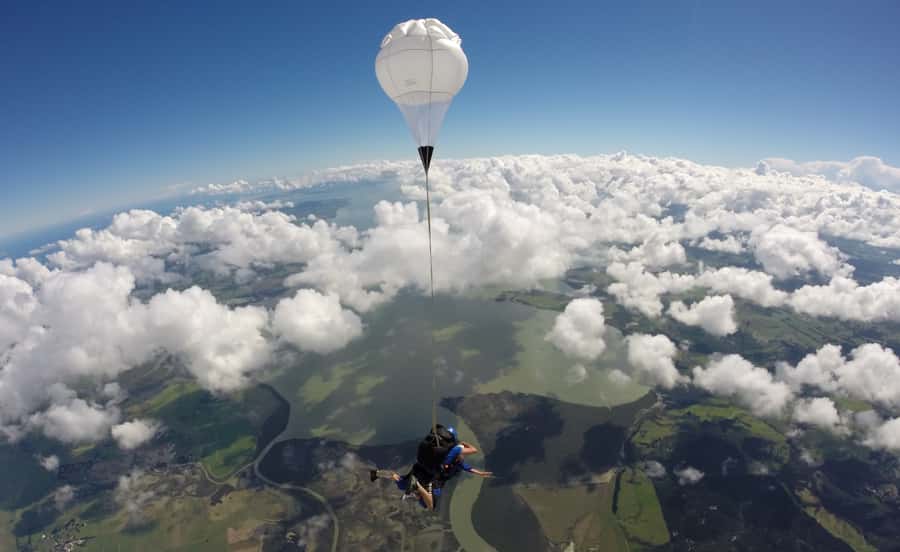
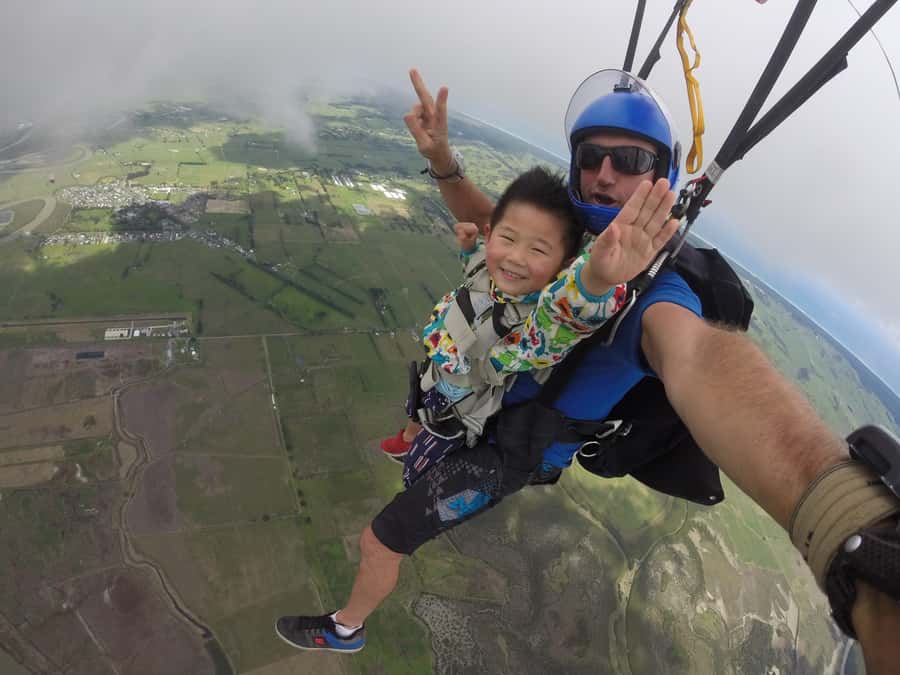
Once the parachute opens, the mood changes sharply. The noise and speed give way to a slower ride, with time to look around and enjoy the views.
This is when the scale of the setting becomes easier to appreciate. You may see the coastline in a more orderly way, along with Auckland’s wider region and the islands offshore. The parachute portion also gives your instructor time to talk with you and point out features, though the exact views depend on cloud and visibility.
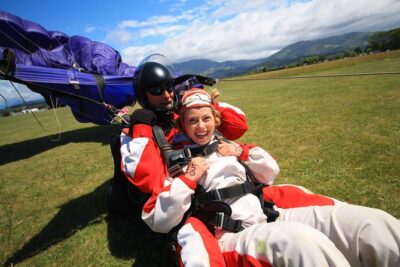
Landing is handled with your instructor. Wear suitable shoes and follow the instructions you are given. The viewing deck gives your support crew a clear place to watch the final moments.
The whole activity is described as safe and suitable for first-timers, but tandem skydiving is still a physically demanding adventure. You must meet the 100-kilogram, or 220-pound, weight limit. It is not suitable during pregnancy. The activity is wheelchair accessible, though anyone with specific mobility concerns should confirm how that accessibility applies to the jump itself before booking.
Weather can change your whole morning
Weather is the main practical risk to your schedule. At least two people described significant delays, including one scheduled for 9 a.m. who did not jump until about noon. Another person waited through gloomy winter conditions before finally making the 18,000-foot jump.
This is normal for an activity that depends on visibility, wind, cloud, and safe operating conditions. You should not plan a fixed lunch, flight, or major tour immediately afterward. If you are visiting Auckland for only a day or two, book the jump early in your stay so a weather delay does not ruin your last chance to do it.
The upside of waiting is that conditions may improve enough for a much better view. The downside is that you may spend a long time in your harness area or waiting for an update. Bring patience, and eat before you arrive. The free cancellation policy allows you to cancel up to 24 hours ahead for a full refund, and the reserve-now, pay-later option keeps your plans flexible.
Photos and video: worth paying extra?
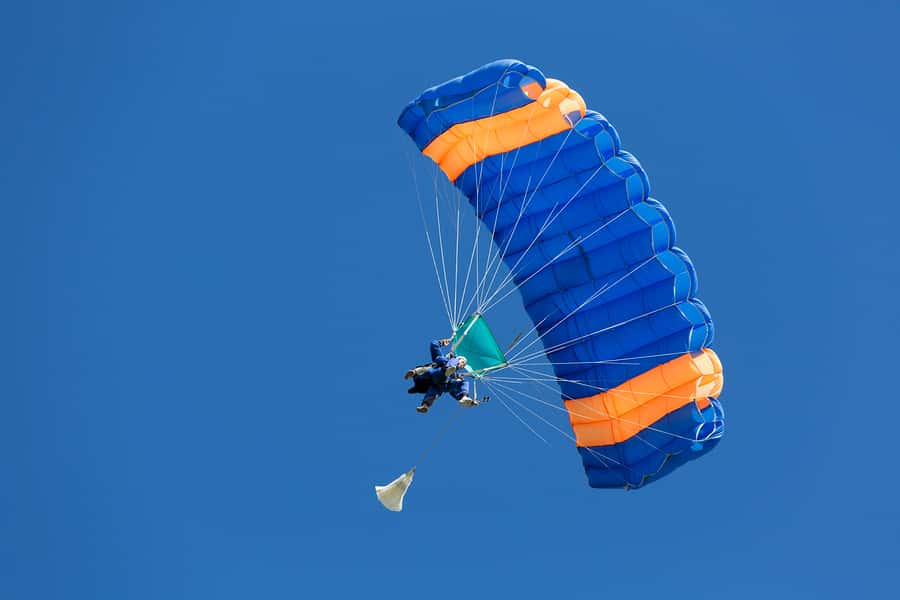
The jump itself includes the selected altitude and all required equipment. The personal photo and video package is an optional extra, purchased on the day.
I think this is worth considering carefully. A tandem jump happens quickly, and you will not be able to take your own pictures while attached to your instructor. If this is a once-in-a-lifetime event, the extra media package may be the best way to remember the aircraft climb, the freefall, and the parachute ride.
One account reported receiving photos and videos within 15 minutes of landing, which is convenient if you want to share them while the feeling is still fresh. Prices for the media options are not provided here, so ask at the site before committing.
If you are mainly interested in the physical experience and do not care about recording it, skip the add-on. The jump does not depend on having a camera package.
Who will enjoy this most?
This is a strong choice for a first tandem jump, especially if you want a dramatic setting without traveling far from Auckland. The staff have a clear track record of helping nervous people settle down, and the tandem format means the instructor handles the essential equipment and procedure.
The 18,000-foot option is best for someone who wants the maximum freefall and the broadest possible view. The 13,000-foot choice makes more sense if you are price-conscious or want the experience without choosing the longest freefall. The 16,000-foot option sits neatly between the two.
It also suits people who want a shared occasion. Friends and family can use the viewing deck, and the activity works well for birthdays and milestone celebrations. A 21st birthday group found it particularly memorable.
This may not suit you if you dislike uncertain schedules, need a guaranteed finish time, or are uncomfortable with cold, wind, and rapid movement. A weather delay can turn a three-hour plan into a much longer morning. Anyone over 100 kilograms, pregnant, or unable to meet the stated requirements should not book.
Is the $206 price good value?
At $206 per person, this is not a casual add-on to a city sightseeing day. You are paying for the aircraft trip, tandem instruction, equipment, and a highly unusual view of Auckland.
The value is strongest if you choose the activity for the setting, not just the thrill. You get a flight above the region, a possible view toward both coasts and distant mountains, and up to 75 seconds of freefall at the highest level. That is a lot of memorable time for an activity that occupies about half a day.
The final cost may be higher if you choose a premium altitude or add photos and video. Ask about those options before the jump, especially if you are traveling on a firm budget.
The high rating of 4.9 from 151 ratings reflects strong satisfaction with the staff, organization, views, and overall experience. The four-star account still found the scenery beautiful and the jump worthwhile. That feels like the right way to read the price: excellent value for an adventure you genuinely want, less compelling if you are only looking for a cheap Auckland activity.
Should you book this Auckland tandem jump?
Book it if you want a major thrill, have a flexible half-day, and like the idea of seeing Auckland from a viewpoint very few visitors reach. I would choose 18,000 feet if the budget allows and the weather looks promising, since the extra freefall and altitude are the main reasons to do this version.
Choose 13,000 feet if you are nervous or watching your spending. Whichever option you select, eat beforehand, wear closed shoes, keep your schedule open, and expect photos and video to cost extra.
The strongest reason to book is the staff. Instructors such as Owen, Aaron, Mitch, James, and Erin have helped many first-timers move from fear to enjoyment. The main reason to hesitate is not the jump itself, but the weather and the wait. If you can accept that uncertainty, Skydive Auckland offers one of the most memorable ways to see the Auckland region.
FAQ
Where does the Auckland tandem skydive take place?
You meet at Skydive Auckland in Parakai, on New Zealand’s North Island. The site is about a 45-minute drive from Auckland City.
How long does the activity take?
The stated duration is three hours. Weather delays can make the visit longer, so avoid booking another activity immediately afterward.
How high can I jump from?
You can choose a tandem jump from 13,000, 16,000, or 18,000 feet, depending on the option you book.
How long is the freefall?
The 18,000-foot option offers up to 75 seconds of freefall. The exact freefall time for the lower altitude choices is not specified.
How fast do you fall?
You can reach speeds of up to 200 km/h during freefall.
What might I see during the jump?
Possible sights include Auckland’s coastal areas, both the East and West coastlines, Waiheke Island, Great Barrier Island, Mount Ruapehu, and Mount Taranaki. Visibility depends on the weather.
Is there a weight limit?
Yes. The maximum weight is 100 kilograms, or 220 pounds.
Can children or teenagers take part?
There is no general age limit stated. Anyone under 18 must bring a parent or guardian or provide a signed waiver. The 18,000-foot option is limited to people aged 12 or older.
Are photos and videos included?
No. Photo and video packages are optional and can be purchased on the day at an additional cost.
Newest jumps around New Zealand
- Tandem Skydive 10,000ft from Franz Josef★ 5.0 · 4 reviews
- Tandem Skydive 13,000ft from Franz Josef★ 4.5 · 16 reviews
- 13,000ft Skydive over Abel Tasman with NZ’s Most Epic Scenery★ 5.0 · 20 reviews
- 10,000ft Skydive over Abel Tasman with NZ’s Most Epic Scenery★ 5.0 · 10 reviews
- Queenstown: Ticket for 2 Indoor Skydiving Flights★ 4.4 · 15 reviews
- Tandem Skydive 16,500ft from Franz Josef★ 5.0 · 19 reviews
- 16,500ft Skydive over Abel Tasman with NZ’s Most Epic Scenery★ 5.0 · 23 reviews
- Tandem Skydive 18,000ft from Franz Josef★ 4.5 · 29 reviews
Tandem Skydives in New Zealand, side by side.
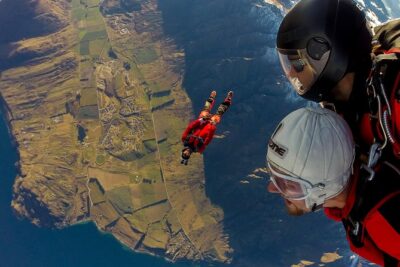
15,000ft Tandem Skydive in Tauranga – Bay of Plenty
Read our review →