
REVIEW · NEW ZEALAND
Skydive Mt. Cook – 45+ Seconds of Freefall from 13,000ft
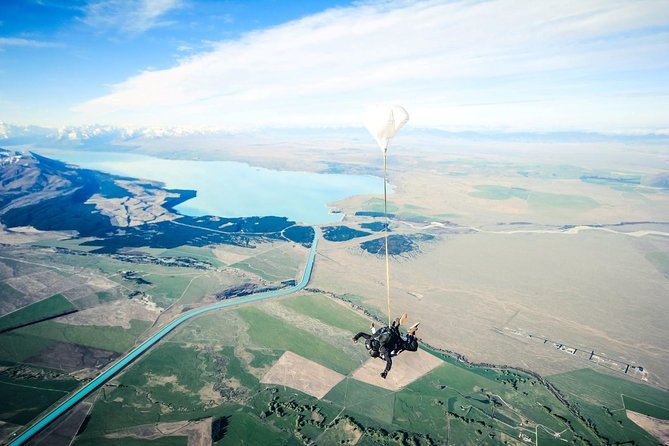
At 13,000 feet, you get more than a thrill. You get a wide-open view of Aoraki/Mt Cook National Park, bright lakes, glaciers, and the Southern Alps while the ground rises slowly beneath you. The freefall lasts more than 45 seconds, long enough for the scenery to register between bursts of pure nerves.
I like the spectacular setting and the small maximum group of nine. I also like the team’s calm approach to safety. The crew will delay or postpone a jump if conditions are poor, which is exactly what you want when a parachute is involved.
The main drawback is practical: this is a weather-dependent, non-refundable booking. If your schedule is tight, or if you weigh 100 kilograms or more and need to pay a surcharge, plan carefully.
Key points to know before your jump
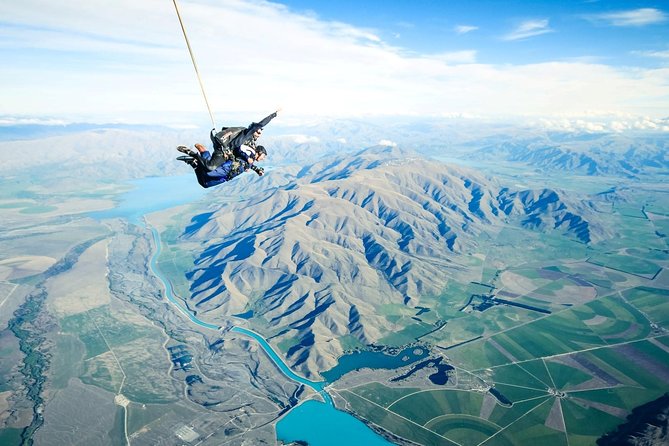
- Freefall from 13,000 feet: Expect more than 45 seconds before the parachute opens.
- Views over Aoraki/Mt Cook National Park: Snow-covered peaks, glaciers, and lakes are the visual reward.
- Small group size: The activity accepts a maximum of nine people.
- Safety comes first: The team may postpone the jump rather than go ahead in poor weather.
- Weight rules apply: A surcharge is charged from 100 kilograms, with a maximum stated range of 115 kilograms.
- Simple two-hour outing: You start and finish at Skydive Mount Cook at Pukaki Airport.
Why the Pukaki setting makes this jump special
Many parachute jumps give you a rush. This one adds one of New Zealand’s great mountain views. The base is at Pukaki Airport, near Twizel, with the Southern Alps and Aoraki/Mt Cook National Park forming the backdrop.
That setting matters because the scenery is not a small bonus below your feet. From high above the ground, you can take in broad stretches of snow-capped mountains, glaciers, lakes, and protected parkland at once. The view has scale. It is the kind of scenery that makes a short activity feel tied to the place you are visiting, rather than something you could do anywhere.
You will spend about two hours at the airport and in the air. The supplied information does not give a minute-by-minute schedule, so allow the full two hours rather than treating the freefall time as the whole outing. Your time includes the arrival process, preparation, safety steps, the flight to altitude, the jump, and the return to the meeting point.
You start and finish at 2 Swallow Drive, Pukaki Airport, Pukaki, Twizel 7999. The activity is near public transportation, but no transport pickup is included in the stated details. I would treat getting to the airport as your responsibility and allow extra time to find the exact meeting point.
More High-Altitude Skydives in New Zealand
- 15,000ft Tandem Skydive in Tauranga – Bay of Plenty
★ 5.0 · 305 reviews - 15,000ft Tandem Skydive in Bay of Plenty
★ 5.0 · 180 reviews - Auckland: 13000, 16000, or 18000-Foot Tandem Skydive
★ 4.9 · 151 reviews
What the 13,000-foot jump actually gives you
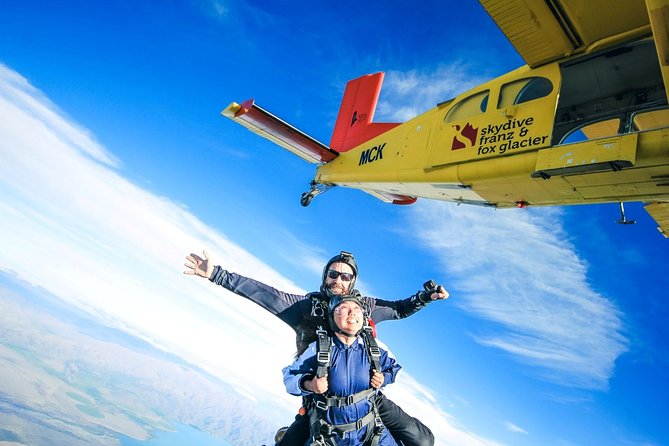
The headline figure is the altitude, but the more useful detail is the freefall time. At 13,000 feet, you receive more than 45 seconds of freefall before the parachute opens. That is long enough to move past the first shock and begin noticing where you are.
The opening moments will likely be the most intense. You are leaving the aircraft, moving rapidly through open air, and relying on your tandem team. Once the initial rush settles, you can focus on the view and the unusual angle on the Southern Alps.
The supplied details do not promise a particular flight path, mountain directly beneath you, or a specific side of the aircraft. Keep that in mind when booking. You are paying for a high-altitude jump in a superb region, not a guaranteed postcard view of one exact peak.
Still, the combination of altitude and scenery gives this outing real value. You are not simply looking down at a town or coastline. You are above a major national park, with glacial features, mountain ridges, and lakes spread out below.
The parachute portion comes after the freefall, though the exact duration is not stated. You then return to the airport, where the activity ends. No separate sightseeing stop or park visit is included, so plan another part of your day if you want time on the ground around Aoraki/Mt Cook.
A small group with a serious safety culture
The maximum group size is nine people, which is useful for an activity that can feel personal and intimidating. A smaller group usually means less waiting around than a large commercial operation, although the exact order of jumps is not provided.
The strongest point from the available feedback is the team’s balance of calm reassurance and strict judgment. One detailed account praises the crew for taking safety seriously, even when that means delaying or postponing a flight. That is not an inconvenience to dismiss. It is one of the best signs you can get from a parachute operator.
You may arrive excited, nervous, or both. The team is described as helping nervous jumpers through the process without treating safety as a performance. That matters because a friendly tone is useful, but only when it sits alongside firm decisions about weather and equipment.
No guide names are supplied, so I cannot tell you to ask for a particular instructor. Instead, pay attention to the general standard of the briefing and harness fitting on the day. You should feel that the crew is willing to answer questions and stop the process if conditions are not right.
The experience has a five-out-of-five rating from 14 reviews, with 100 percent recommending it. That is a very positive small sample, not a guarantee that every jump will go perfectly. The practical lesson is that the crew’s attitude appears to be a major part of the experience, not just the scenery.
Weather can change the plan
Good weather is required, and the operator may cancel if conditions are unsuitable. If that happens, you are offered another date or a full refund.
This is sensible, but it creates a planning issue. The experience is listed as non-refundable and cannot be changed for personal reasons. If you cancel, request an amendment, or simply decide you no longer want to jump, the amount paid will not be returned.
I would book this only when your South Island plans have enough flexibility. If the jump is the centerpiece of your trip, avoid placing it on your final day. A weather delay is much easier to handle when you have spare time afterward.
The weather rule also means that a canceled jump is not automatically a sign of poor service. Mountain weather can affect visibility and flying conditions quickly. A postponed flight may be disappointing, but the stated approach puts safety ahead of keeping the schedule.
The price is listed at $266.23 per person. That is a serious spend for a two-hour activity, but the value depends on what you want from your time near Aoraki/Mt Cook. You are paying for the flight to 13,000 feet, the tandem jump, the team, equipment, and access to a mountain setting that gives the experience its character.
If you mainly want a scenic flight, this is not the simplest way to get one. You are also accepting the physical and emotional demands of a parachute jump. If you want a major personal challenge with the scenery built into it, the price is easier to justify.
Remember the weight surcharge. People weighing 100 to 110 kilograms pay an extra $40, while those between 111 and 115 kilograms pay an extra $60. Anyone between 100 and 115 kilograms may jump only after an assessment by a tandem master and a harness fitting on the day.
There is a stated weight limit, and the supplied information does not say that people above 115 kilograms can participate. If your weight is close to the upper range, contact the operator before committing money and holiday time.
Same sky, a different way down:
- Skydive Auckland
★ 5.0 · 1,516 reviews - NZONE Skydive Queenstown
★ 4.5 · 1,438 reviews - Queenstown: Tandem Skydive Experience
★ 4.8 · 475 reviews - Lake Taupo 12,000-Foot Tandem Skydiving
★ 5.0 · 359 reviews
Who will get the most from this experience
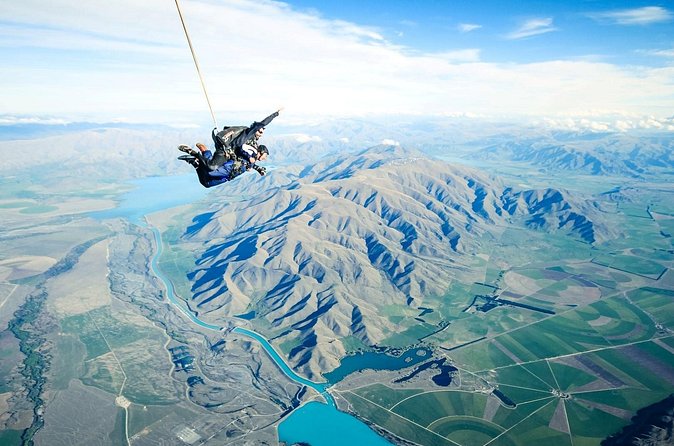
This is best for you if a parachute jump is already high on your list and you want a memorable New Zealand setting rather than an ordinary drop zone. The mountain, glacier, and lake views give the activity a strong sense of place.
It also suits people who appreciate a careful operation. The team’s willingness to postpone in poor weather should reassure you, especially if this is your first tandem jump.
The activity may be less suitable if you dislike fixed bookings or have no flexibility in your itinerary. The non-refundable policy makes last-minute changes costly, and weather can affect the schedule.
It is also not ideal if you are looking for a relaxed sightseeing outing. The views are remarkable, but the experience begins with a serious adrenaline hit. You need to be comfortable with the basic demands of a tandem freefall and harness fitting.
The information says most people can participate, and service animals are allowed. It does not provide details about medical conditions, pregnancy, age requirements, clothing, cameras, or what you should bring. Ask the operator directly about any personal concern before booking rather than assuming the general participation statement covers it.
How to plan your two hours at Pukaki Airport
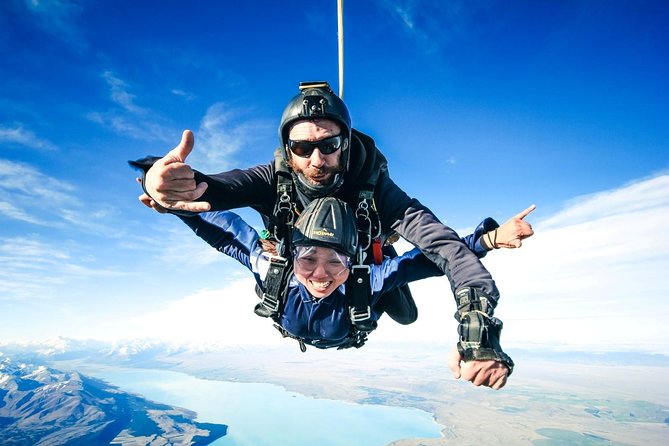
Keep the start point clear in your plans: Skydive Mount Cook, 2 Swallow Drive, Pukaki Airport, Pukaki, Twizel. The activity returns to this same location, so you do not need to arrange a separate end point.
Confirmation is provided when you book, and the ticket is mobile. I would keep the confirmation easy to access on your phone, especially if you are moving between places in the Mackenzie Basin.
The stated duration is approximately two hours. Do not schedule a tight meal, bus departure, or long drive immediately afterward. The exact timing can depend on weather and the operation’s flight schedule, and the supplied information does not promise a fixed departure minute.
The group cap of nine helps keep the outing manageable, but it does not remove the need for patience. A weather check, safety decision, or flight delay can affect the rhythm of the visit. Build your day around the jump rather than squeezing it into a narrow gap.
Since the experience starts and ends at the airport, you can pair it with other South Island sightseeing before or after. Just keep enough time between activities. The jump itself is only one part of the visit, and mountain weather deserves a little room in your schedule.
The best reason to book, and the best reason to hesitate
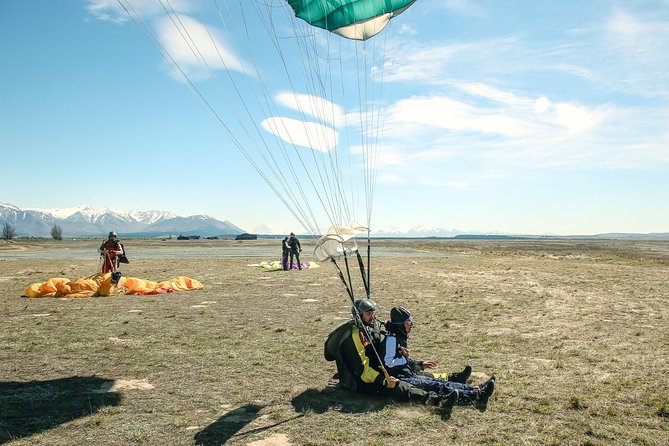
The best reason to book is the setting. Freefalling above Aoraki/Mt Cook National Park gives you a rare view of the South Island, and the 13,000-foot altitude provides more than 45 seconds to take it in.
The next strongest reason is the crew’s reported balance of warmth and caution. A nervous first-time jumper needs encouragement, but you also need a team prepared to postpone when conditions are unsafe. This operation appears to take both needs seriously.
The main reason to hesitate is not the price alone. It is the combination of a non-refundable booking, weather risk, and weight rules. You need a flexible itinerary and a clear understanding of the extra charge if you weigh 100 kilograms or more.
Should you book Skydive Mt Cook?
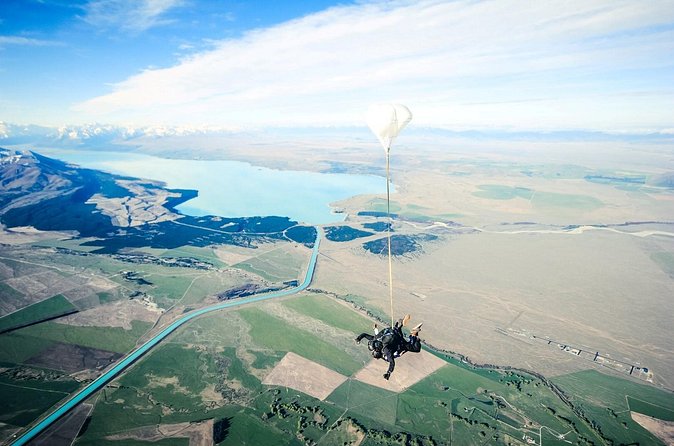
Book it if you want a major adrenaline experience tied closely to New Zealand’s mountain scenery, and if you can keep your schedule flexible. The high altitude, long freefall, small group, and views of glaciers, lakes, and Aoraki/Mt Cook National Park make this more distinctive than a standard parachute jump.
Skip it if you are seeking a gentle scenic activity, cannot risk losing the booking cost, or have a tight departure schedule. For the right person, the $266.23 price buys a memorable South Island story. Just give the weather, the safety process, and your own nerves the respect they deserve.
FAQ
Where does Skydive Mt Cook start and finish?
The experience starts at Skydive Mount Cook, 2 Swallow Drive, Pukaki Airport, Pukaki, Twizel 7999, New Zealand. It ends back at the same meeting point.
How high is the jump?
The jump takes place from 13,000 feet.
How long is the freefall?
You receive more than 45 seconds of freefall before the parachute opens.
How long does the full experience take?
The activity lasts approximately two hours.
What happens if the weather is poor?
If poor weather causes the experience to be canceled, you are offered a different date or a full refund.
Can I cancel for a refund?
No. The experience is non-refundable and cannot be changed for personal reasons. If you cancel or request an amendment, the amount paid is not refunded.
Are there weight limits or extra charges?
Yes. People weighing between 100 and 115 kilograms may be able to jump after assessment by a tandem master and a harness fitting on the day. A $40 surcharge applies from 100 to 110 kilograms, and a $60 surcharge applies from 111 to 115 kilograms.
Newest jumps around New Zealand
- Skydive Mt. Cook – 70+ Seconds of Freefall from 16,500ft★ 5.0 · 5 reviews
- Skydive Mt. Cook – 20+ Seconds of Freefall from 10,000ft★ 5.0 · 5 reviews
- Tasman Experience and Skydive | Combo★ 5.0 · 2 reviews
- Bay of Islands: 9000ft Skydive★ 4.5 · 12 reviews
- Tandem Skydive 13,000ft from Franz Josef★ 4.5 · 16 reviews
- 13,000ft Skydive over Abel Tasman with NZ’s Most Epic Scenery★ 5.0 · 20 reviews
- 10,000ft Skydive over Abel Tasman with NZ’s Most Epic Scenery★ 5.0 · 10 reviews
- Queenstown: Ticket for 2 Indoor Skydiving Flights★ 4.4 · 15 reviews
High-Altitude Skydives in New Zealand, side by side.
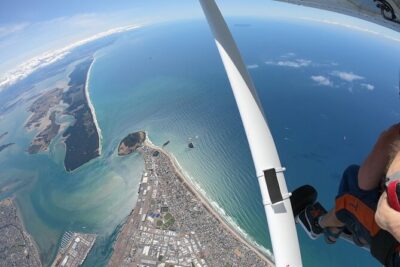
15,000ft Tandem Skydive in Tauranga – Bay of Plenty
Read our review →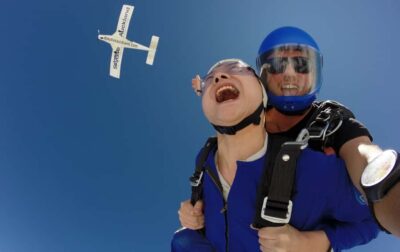
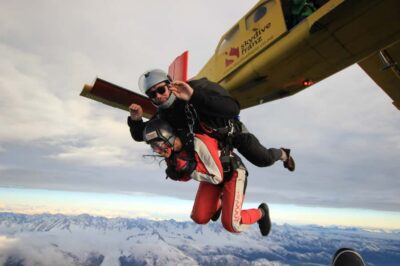
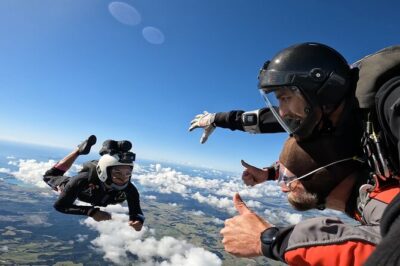
16,500ft Skydive over Abel Tasman with NZ’s Most Epic Scenery
Read our review →
13,000ft Skydive over Abel Tasman with NZ’s Most Epic Scenery
Read our review →Lists this jump appears in