
REVIEW · NEW ZEALAND
Skydive Mt. Cook – 70+ Seconds of Freefall from 16,500ft
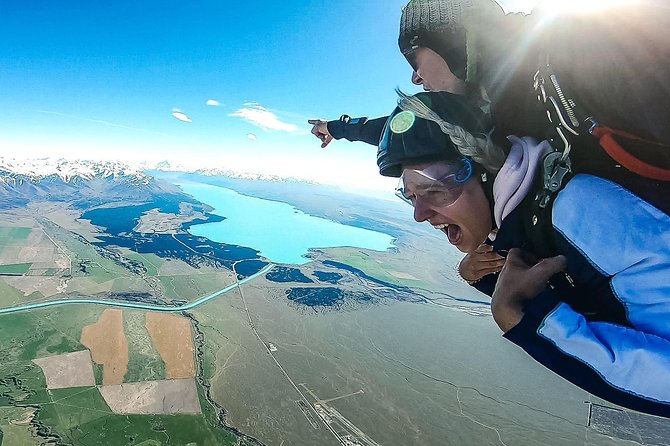
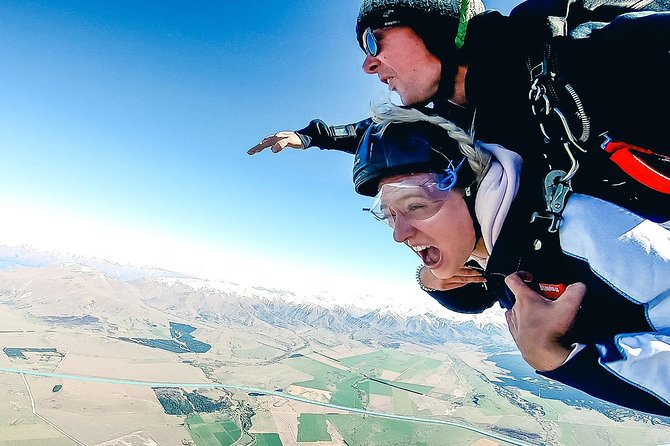
The big draw here is simple: you get more than 70 seconds of freefall from 16,500 feet with Aoraki/Mt Cook National Park, glaciers, lakes, and snow-covered peaks below. I like the setting because the views are not an extra feature tacked onto the jump. They are the reason to choose this location.
I also like the small maximum group of nine and the upbeat crew, described as happy, bubbly, and inspiring. The main drawback is the weather. A cloudy or stormy day can cancel the experience, so you need some flexibility in your South Island plans.
Key points at a glance
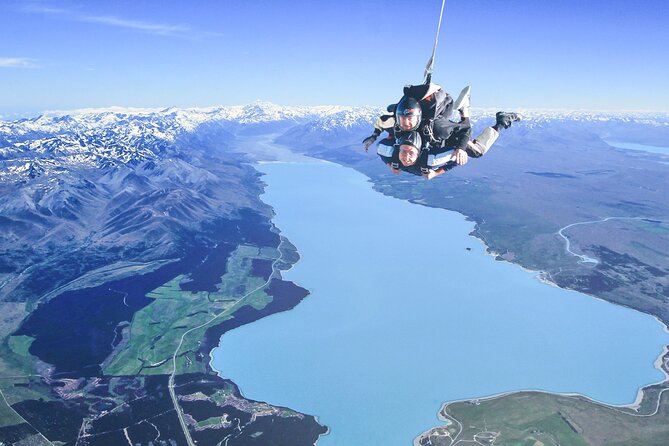
- 16,500-foot jump: You receive more than 70 seconds of freefall, making this the highest jump option described here.
- Mountain scenery below: Expect views toward snow-capped mountains, glaciers, lakes, and Aoraki/Mt Cook National Park.
- Pukaki Airport meeting point: Start and finish at Skydive Mount Cook, 2 Swallow Drive, Pukaki Airport, Pukaki, Twizel 7999.
- Small group limit: The activity accepts a maximum of nine people, which should help keep the operation focused.
- Roughly two hours: Set aside about two hours for the full experience, not just the freefall itself.
- Weather matters: Poor conditions can lead to a new date or a full refund, and you can cancel free of charge up to 24 hours ahead.
Why this jump is about more than the freefall
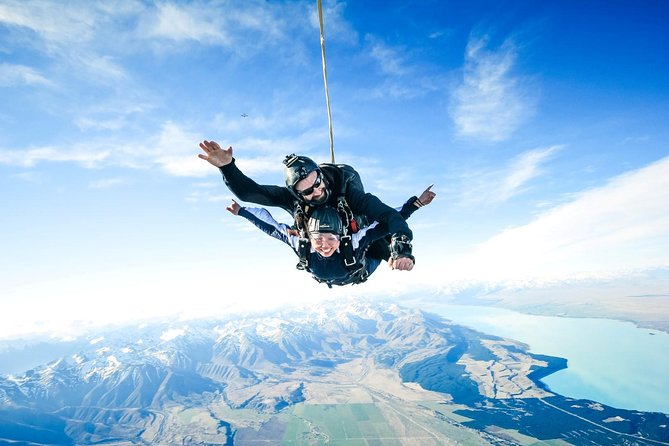
A parachute jump is thrilling almost anywhere. Here, the setting gives it a clear sense of place. You are not simply looking down at a generic patchwork of fields or buildings. The advertised view takes in the Southern Alps, glaciers, lakes, and Aoraki/Mt Cook National Park, one of the South Island’s great mountain areas.
That matters because a 16,500-foot jump gives you time to take in the view as well as the sensation. The more than 70 seconds of freefall are the headline feature, but the real appeal is the mix of speed and scenery. You get a short, intense experience with a strong New Zealand identity.
I also like that this is based at Pukaki rather than in a large city or resort center. The meeting point is at Pukaki Airport, near Twizel, so the setting fits naturally into a South Island road trip. If you are already heading through the Mackenzie Basin toward Aoraki/Mt Cook, the activity can fit into a day built around mountains and open country.
The experience is described as an authentic kiwi activity, and that phrase makes sense in one practical way: the scenery is central, not decorative. The surrounding region is the star. You are paying for a high-altitude freefall in a place where the view below has genuine character.
More High-Altitude Skydives in New Zealand
- 15,000ft Tandem Skydive in Tauranga – Bay of Plenty
★ 5.0 · 305 reviews - 15,000ft Tandem Skydive in Bay of Plenty
★ 5.0 · 180 reviews - Auckland: 13000, 16000, or 18000-Foot Tandem Skydive
★ 4.9 · 151 reviews
Arriving at Pukaki Airport
Your visit begins at Skydive Mount Cook, 2 Swallow Drive, Pukaki Airport, Pukaki, Twizel 7999, New Zealand. The activity ends back at this same meeting point, so you do not need to arrange a separate pickup location at the other end.
The supplied details do not specify a hotel transfer, so plan to reach the airport yourself. The location is near public transportation, but the information does not state which services run there or how often. Check your route carefully before booking, especially if you are not driving.
Confirmation arrives when you book, and a mobile ticket is available. That is useful for a road trip. Keep the booking details accessible on your phone, and allow time to arrive at the stated airport address rather than treating the jump as a casual roadside stop.
The total experience lasts about two hours. I would protect more than two hours in your day if possible. The stated length is approximate, and weather-related timing can affect a flight operation. Do not schedule an important connection immediately afterward.
The pre-jump part of the experience
The supplied information does not give a minute-by-minute schedule for check-in, preparation, or the flight. You should therefore think of the two-hour estimate as the full activity window, not as two hours of freefall.
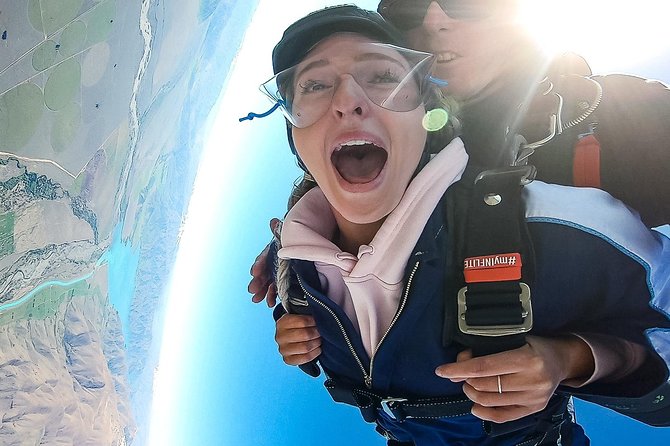
The crew is one of the strongest human elements here. The available feedback describes a great team with a happy, bubbly, inspiring manner, and says that this made the jump more enjoyable. That is worth noting because the staff set the tone before you leave the ground. A calm, positive team can make a major difference when you are facing a very large number on the altitude gauge.
The maximum group size is nine. That is not a guarantee that nine people will be there on your date, but it does put a clear limit on the scale of the operation. I prefer that kind of information when booking an adrenaline activity. It gives you a better idea of the likely group size than an open-ended departure would.
The details do not name individual guides or explain the safety briefing, equipment, or jump format. I would not assume anything beyond what is confirmed. If you have questions about the procedure, ask the operator when you book or at confirmation.
16,500 feet above the Southern Alps
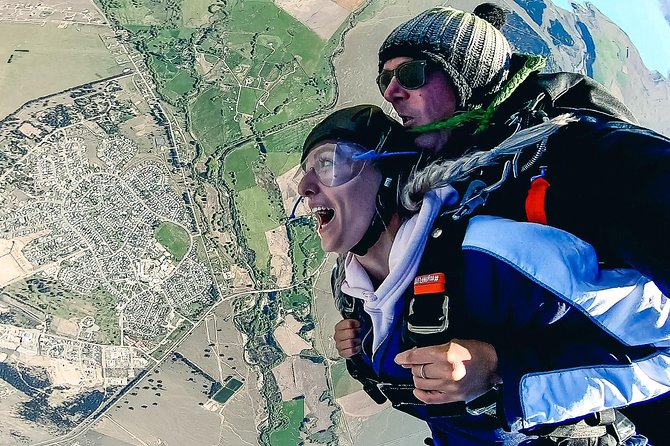
The jump itself is the central event. At 16,500 feet, you are high enough for more than 70 seconds of freefall, according to the experience title. That is a long stretch of unbroken falling compared with lower-altitude options, and it is the feature that justifies the premium feel of this particular experience.
The view should change the character of the jump. From the air, you can expect the advertised combination of snow-capped mountains, glaciers, lakes, and Aoraki/Mt Cook National Park. The details do not promise a particular mountain peak in every direction or guarantee clear views on every departure, so keep expectations tied to the weather.
This is where the location earns its keep. If you only want the physical thrill of a freefall, you may find cheaper or more urban options elsewhere. If you want the freefall paired with some of New Zealand’s most recognizable alpine scenery, Pukaki makes a stronger case.
The activity description does not state exactly how long the parachute portion lasts or what happens after freefall. I would focus your decision on the confirmed elements: the 16,500-foot altitude, the 70-plus seconds of freefall, the mountain setting, and the roughly two-hour total duration.
Same sky, a different way down:
- Skydive Auckland
★ 5.0 · 1,516 reviews - NZONE Skydive Queenstown
★ 4.5 · 1,438 reviews - Queenstown: Tandem Skydive Experience
★ 4.8 · 475 reviews - Lake Taupo 12,000-Foot Tandem Skydiving
★ 5.0 · 359 reviews
What the views mean for your booking choice
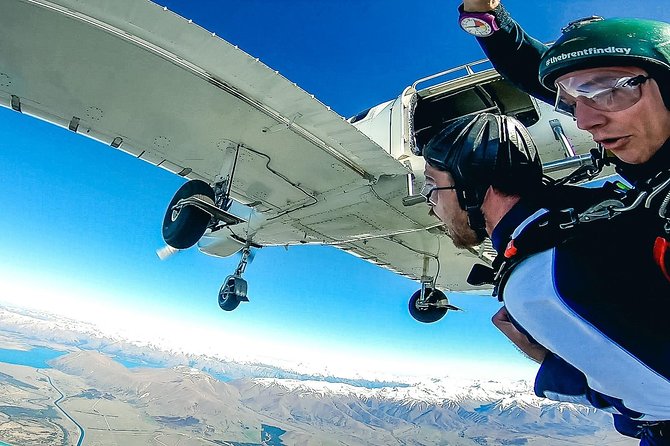
Weather is not a minor footnote here. It controls whether the activity can run and how much of the mountain scenery you may see. If the experience is canceled because of poor weather, you are offered another date or a full refund.
That policy gives you useful protection, but it does not solve the scheduling problem. If you have only one free morning in the region, a weather cancellation may be difficult to absorb. I would book this with at least some spare time in your itinerary, especially if seeing Aoraki/Mt Cook is a major reason for your South Island trip.
A clear day should offer the best chance of matching the advertised views. A day with cloud may still allow the jump to proceed, but the mountains and glaciers could be less visible. The supplied information does not promise clear views, so do not book on the assumption that every feature will appear perfectly.
The activity also requires a minimum number of participants. If that minimum is not met, you are offered another date or experience, or a full refund. That is fair protection, though it adds another reason not to build a tight, one-shot schedule around the jump.
Is the $341.08 price good value?
At $341.08 per person, this is a major line in a South Island travel budget. I would not call it a casual add-on. The value depends on what you want from the experience.
The price makes more sense if you value all of these elements together:
- A 16,500-foot jump
- More than 70 seconds of freefall
- A mountain setting near Aoraki/Mt Cook
- Views of glaciers, lakes, and snow-covered peaks
- A small maximum group of nine
- A roughly two-hour experience
If the freefall is your only priority, compare the price with other jump options before booking. If the setting is the point, the cost is easier to defend. You are not only paying for a physical thrill. You are choosing a particular piece of South Island scenery as the backdrop.
I also like that the cancellation terms reduce some financial risk. You can cancel up to 24 hours before the start time for a full refund. Cancellations or changes made within 24 hours are not refunded or accepted, so mark the local cut-off time clearly.
This is best treated as a centerpiece activity, not something to squeeze between several fixed appointments. The price will feel better if you give the experience enough room in your schedule and if the alpine views are high on your list.
Who will enjoy this most?
I would recommend this for an adult or older participant who wants a serious freefall experience with scenery that feels distinctly New Zealand. The altitude and freefall duration make it more than a quick thrill. You need to be comfortable committing a substantial part of your day and a substantial part of your budget.
It also suits people building a road trip around Twizel, Pukaki, and Aoraki/Mt Cook. The start and end point are the same, and the setting makes sense as part of a wider mountain visit.
The activity may be less suitable if you have no schedule flexibility, need guaranteed clear views, or dislike weather-dependent plans. It may also be poor value if you are interested only in the act of falling and do not care about the scenery.
Most people can participate, according to the supplied details, and service animals are allowed. That does not answer every health, age, or equipment question, so ask the operator directly if you have a specific concern.
Practical planning for the day
Book for a day when you can stay flexible. The experience requires good weather, and a cancellation can lead to a new date or a full refund. Avoid placing a long drive, flight, or other prepaid activity immediately afterward.
Use the exact meeting point: Skydive Mount Cook, 2 Swallow Drive, Pukaki Airport, Pukaki, Twizel 7999. Since the activity returns there, you can plan the rest of your day from the same base.
The mobile ticket is handy, but I would still keep your confirmation details easy to find. The activity is limited to nine participants, and confirmation is received at booking, so you should have the key details before the day arrives.
Near public transportation is helpful, but no transport timetable or transfer service is provided in the available information. Check how you will reach Pukaki Airport before committing to the booking.
Should you book Skydive Mt Cook?
Book it if you want a high-altitude freefall tied to real South Island scenery, not just an adrenaline hit. The 16,500-foot jump, 70-plus seconds of freefall, small group limit, and views toward Aoraki/Mt Cook National Park make this a memorable choice for the right kind of day.
I would skip it if your budget is tight, your schedule cannot handle a weather change, or you need guaranteed mountain views. For everyone else, this is a strong splurge: expensive, weather dependent, and highly specific, but well matched to a South Island itinerary built around mountains, lakes, and open sky.
FAQ
Where does Skydive Mt Cook begin?
It begins at Skydive Mount Cook, 2 Swallow Drive, Pukaki Airport, Pukaki, Twizel 7999, New Zealand.
Where does the activity end?
The activity ends back at the meeting point at Pukaki Airport.
How high is the jump?
The jump is from 16,500 feet.
How long is the freefall?
The experience includes more than 70 seconds of freefall.
How long does the full activity take?
The full activity lasts approximately two hours.
What scenery can I expect to see?
The experience is set among snow-capped mountains, glaciers, lakes, and Aoraki/Mt Cook National Park.
How many people can join?
The maximum group size is nine travelers.
Can I cancel for a full refund?
Yes. You can cancel at least 24 hours before the experience start time for a full refund. Cancellations within 24 hours are not refunded.
What happens if weather or low numbers cancel the experience?
If poor weather cancels the experience, you are offered another date or a full refund. If the minimum number of participants is not met, you are offered another date or experience, or a full refund.
Newest jumps around New Zealand
- Skydive Mt. Cook – 45+ Seconds of Freefall from 13,000ft★ 5.0 · 14 reviews
- Skydive Mt. Cook – 20+ Seconds of Freefall from 10,000ft★ 5.0 · 5 reviews
- Tasman Experience and Skydive | Combo★ 5.0 · 2 reviews
- Bay of Islands: 9000ft Skydive★ 4.5 · 12 reviews
- Tandem Skydive 10,000ft from Franz Josef★ 5.0 · 4 reviews
- Tandem Skydive 13,000ft from Franz Josef★ 4.5 · 16 reviews
- 13,000ft Skydive over Abel Tasman with NZ’s Most Epic Scenery★ 5.0 · 20 reviews
- 10,000ft Skydive over Abel Tasman with NZ’s Most Epic Scenery★ 5.0 · 10 reviews
High-Altitude Skydives in New Zealand, side by side.
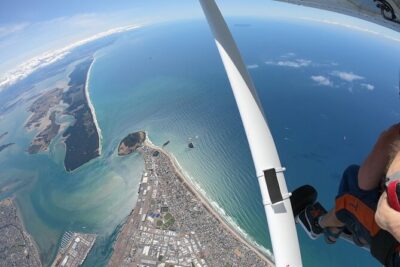
15,000ft Tandem Skydive in Tauranga – Bay of Plenty
Read our review →
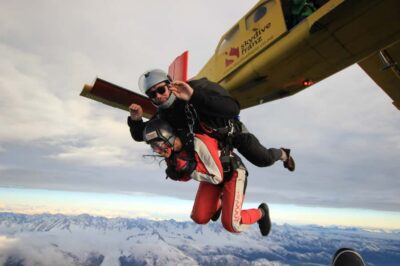
16,500ft Skydive over Abel Tasman with NZ’s Most Epic Scenery
Read our review →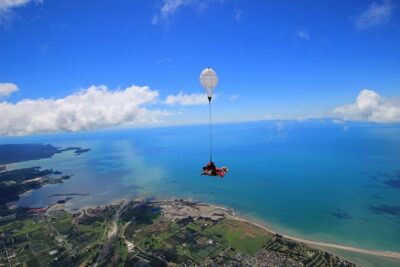
13,000ft Skydive over Abel Tasman with NZ’s Most Epic Scenery
Read our review →Lists this jump appears in