
REVIEW · NEW ZEALAND
Bay of Islands: 12,000ft Skydive
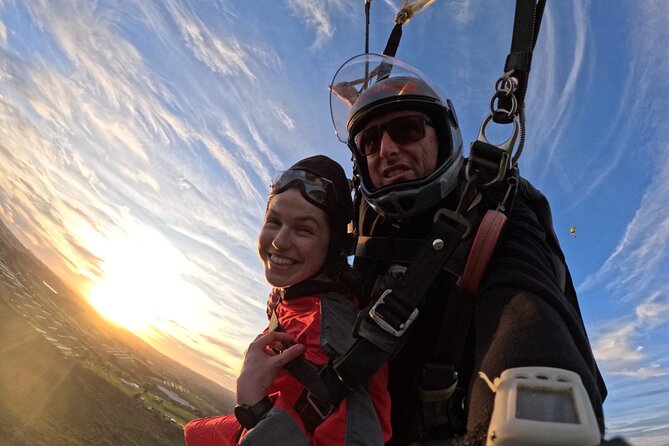
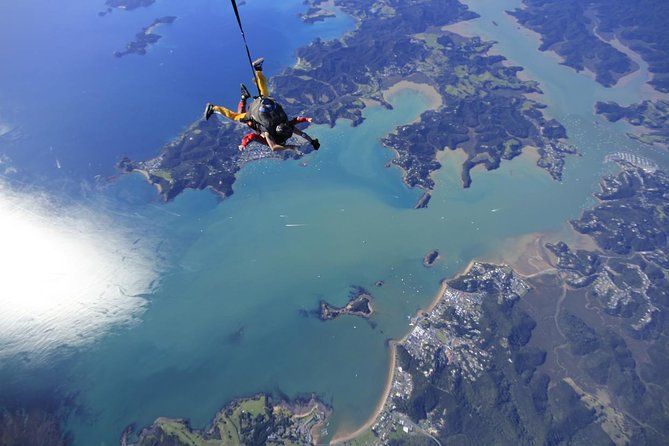
Dropping from 12,000 feet above the Bay of Islands gives you 40 seconds of freefall before the parachute opens. That is long enough to feel the rush, then settle into wide views of 144 islands, blue water, beaches, and the northern coast.
I like the excellent choice of jump times and the practical pickup service from central Paihia and Kerikeri. I also like that the operation has a clear safety structure, with trained instructors, supplied equipment, and a phone check one hour before your scheduled jump.
The main catch is time. The jump itself is brief, but you should allow two to four hours because weather and aviation needs can change the schedule. You also face a strict 100-kilogram weight limit, and photos or video cost extra.
Key points before you book
- 12,000-foot jump: You get about 40 seconds of freefall before the parachute opens.
- 144-island view: The Bay of Islands, Paihia, Russell, Cape Brett, and nearby coast are the main visual rewards.
- Pickup options: Transport is offered from selected central locations in Paihia and Kerikeri.
- Allow extra time: The usual process takes about 1.5 hours, but weather or aircraft needs can stretch it to four hours.
- Bring the right gear: Wear comfortable clothes and closed-toe shoes. Training and safety equipment are supplied.
- Record the moment: Photos and video are available to buy, but they are not included in the $93 price.
Why the Bay of Islands makes a good jump site
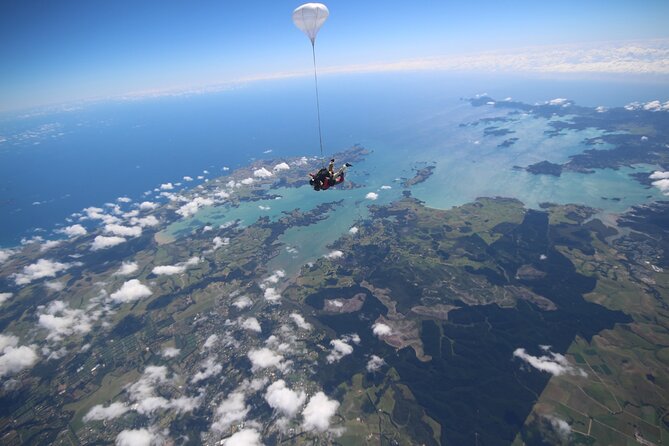
A skydive is only partly about the freefall. The rest is about what spreads out below you, and the Bay of Islands gives you plenty to look at once the parachute opens.
The region is known for 144 islands scattered across clear water. From the air, those islands create a pattern of small beaches, headlands, channels, and offshore rocks. You will not see every island clearly on every jump, but the broad view gives you a useful sense of how the bay fits together.
The area also carries strong cultural and historical meaning. Cape Reinga, where the Pacific Ocean and Tasman Sea meet, is farther north and is not directly visible during most jumps. Still, knowing that this northern region has deep spiritual importance adds context to the view. The skydive is not just a high-altitude thrill ride over anonymous countryside.
The price listed is $93, which makes this a relatively accessible way to try tandem skydiving. Check the price carefully at booking, since photos and video are separate purchases and transport arrangements depend on your pickup point. The value is strongest if you want the 12,000-foot jump and the view itself, rather than a package with every souvenir included.
More Skydives in New Zealand:
- Skydive Auckland
★ 5.0 · 1,516 reviews - NZONE Skydive Queenstown
★ 4.5 · 1,438 reviews - Queenstown: Tandem Skydive Experience
★ 4.8 · 475 reviews
From Kerikeri to the drop zone
The meeting point is at 182 Wiroa Road in Kerikeri. Pickup and drop-off are available from selected central locations in Paihia and Kerikeri, but this is not a universal hotel pickup service. If you are staying outside those areas, plan your own way to the meeting point.
The operation offers several jump times through the day. That helps you fit the skydive around a boat trip, a visit to Russell, or time in Kerikeri. Still, do not schedule another fixed activity too tightly afterward. The stated jump process usually takes about 1.5 hours, but you are asked to allow two to four hours.
That extra time is not needless padding. Skydiving depends on weather, aircraft operations, and the order in which jumpers are ready. You must call 0800 GO JUMP one hour before your scheduled time to confirm that conditions are suitable. Make that call part of your plan, not an afterthought.
You receive confirmation when booking. An open-dated voucher needs to be booked seven days before the requested jump date, and printed tickets or vouchers must be presented at the drop zone. Those details are easy to miss if you rely only on your phone.
Training, equipment, and the tandem jump
You jump with a professional instructor, and the necessary training and safety equipment are provided. A tandem jump means you are attached to the instructor, so you do not need previous skydiving experience or the technical skill required for a solo jump.
Expect practical instructions before boarding the aircraft. You will need comfortable clothing and closed-toe shoes. This is not the time for loose sandals, restrictive clothes, or footwear that could come off.
The aircraft climbs to 12,000 feet, or about 3,658 metres. At the jump altitude, you and your instructor leave the aircraft together. The first 40 seconds are freefall. That is the sharpest part of the experience, with fast air, noise, and a very different view of the ground below.
After the parachute opens, the pace changes. You have more time to look around at the islands and coastline before returning to the drop zone. The contrast is one reason the jump works so well: the freefall delivers the physical thrill, while the parachute ride gives you time to appreciate where you are.
The company also offers higher-altitude jumps, including an 18,000-foot option, with supplemental oxygen during the ascent. That is not part of the 12,000-foot experience described here, so ask about current upgrade prices and inclusions if the extra altitude interests you. Do not assume that the $93 price covers a higher jump.
What you may see from 12,000 feet
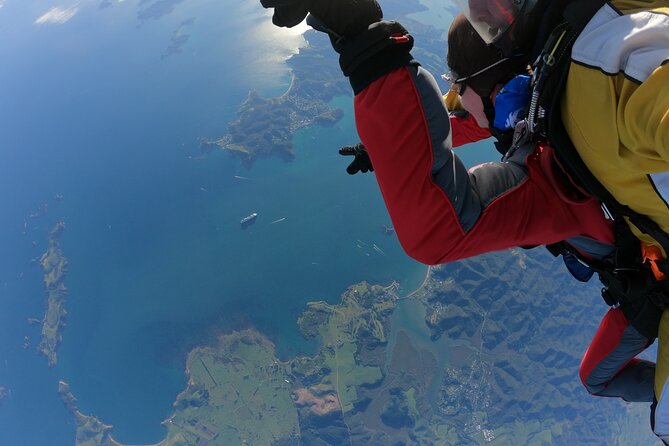
The exact view depends on the flight path, weather, and visibility, but several local landmarks are associated with the jump.
Paihia is the main coastal base for exploring the bay. From above, its position along the water helps you understand the shape of the shoreline and the nearby islands.
Across the bay, Russell is a former colonial-era town with a picturesque waterfront. Its historic setting is easier to place from the air, where the town appears as part of the wider network of water and coastal roads.
Waitangi is especially important to New Zealand’s story. The grounds are linked with the founding of modern New Zealand and the signing of the Treaty of Waitangi. You should not expect to study individual buildings from freefall, but aerial views place this important site within the wider bay.
Urupukapuka Island, the largest island in the Bay of Islands, is known for hiking trails and clear water. It is one of the memorable island shapes to look for below, especially once the parachute opens and you can spend more time scanning the bay.
Kerikeri lies inland and is home to New Zealand’s oldest stone buildings. The town is surrounded by green countryside, making it a different part of the view from the open water and offshore islands.
Near Cape Brett, Piercy Island, also called the Hole in the Rock, has a natural archway. It is a famous sight on boat trips through the bay, though its distance from the drop zone means visibility will vary.
Cape Brett itself is a rugged peninsula with cliffs and broad ocean views. From above, its coastal shape helps explain why the area is so popular for scenic cruises and walks.
Farther along the coast, the Rainbow Warrior memorial near Matauri Bay marks the 1985 bombing of the Greenpeace ship. It may not be clearly visible from every jump, but it is part of the wider northern setting connected with the flight area.
The Poor Knights Islands and Cape Reinga are listed among the region’s notable sights, but you should keep expectations realistic. Cape Reinga is not directly visible during most jumps, and distant islands or memorials may be too small to identify from the air. The main reward is the overall view of the bay, not a guaranteed checklist of every landmark.
Same sky, a different way down:
- Lake Taupo 12,000-Foot Tandem Skydiving
★ 5.0 · 359 reviews - Tandem Skydive Experience in Taupo
★ 5.0 · 324 reviews - 15,000ft Tandem Skydive in Tauranga – Bay of Plenty
★ 5.0 · 305 reviews - Wanaka: Tandem Skydive Experience
★ 4.8 · 252 reviews
The time commitment matters more than it first appears
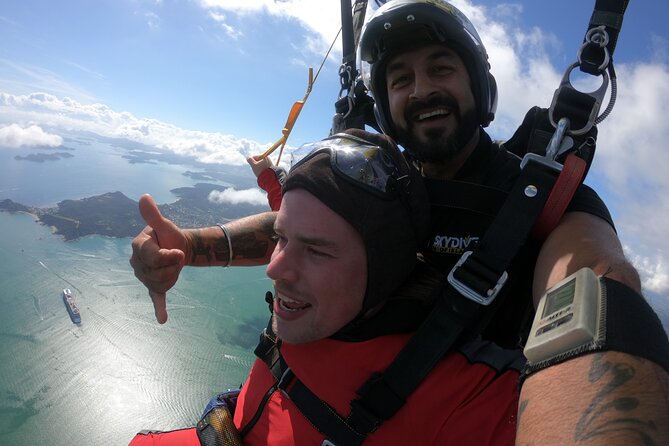
The listed duration is about four hours, although the jump process often takes around 1.5 hours. That difference is important if you are arranging transport, meeting a boat, or catching a bus.
Weather is the biggest variable. A clear morning does not guarantee that your exact jump time will go ahead, and a delay can affect the rest of your day. Keep your schedule loose. If this is your only chance to skydive during a short stay, avoid placing the booking immediately before an important departure.
People booked to jump take priority in shuttle vans. Spectators can come along when space allows, but they may need separate transport if the vans are full. This matters if you are traveling with family or friends who do not plan to jump.
The group size is capped at 20 people. That does not mean all 20 people will be attached to one instructor or leave the aircraft at once, but it gives you a sense of the operation’s maximum scale. If you want a quiet, private outing, this is not advertised as a private flight.
Photos, video, and the real cost
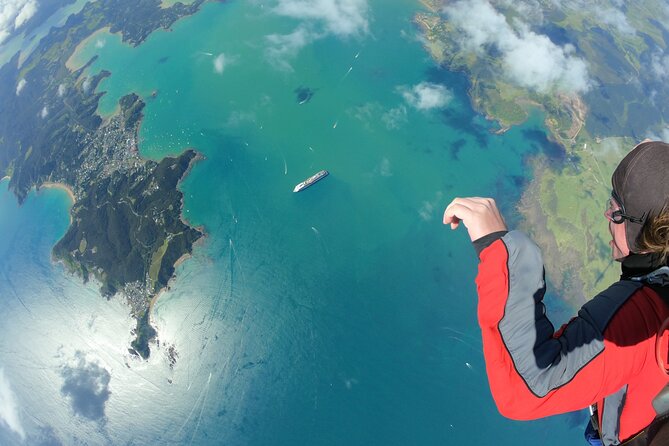
Photos and video are available to purchase, while food and drinks are not included. The core price covers the jump experience, professional guidance, equipment, and selected pickup and drop-off services.
I would decide about media before arriving. A skydive is hard to describe afterward, and you cannot operate your own camera during the jump. If having proof of the freefall matters to you, budget for the add-on. If you care more about keeping the price down, the jump itself still provides the full experience without buying a package.
The separate media cost also means the advertised price should not be treated as the final amount for a fully recorded outing. Ask what each option includes, such as still images, video, or a separate videographer. Higher-altitude packages may also have different prices.
At $93, the base experience offers solid value for a tandem jump over a major scenic area, provided you understand the limits. You are paying for the jump, not a meal, a private flight, guaranteed landmark visibility, or included media.
Who will get the most from this experience
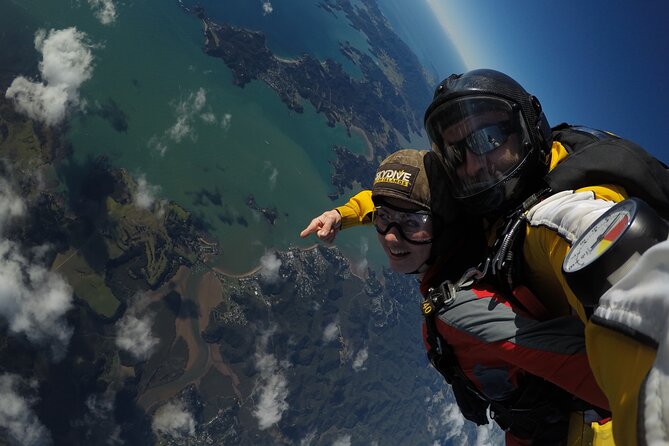
This suits an adult or child aged eight and older who wants a major thrill without learning to jump solo. Anyone under 18 needs signed consent from a parent or guardian.
You should have a moderate level of physical fitness. If you have a medical condition that could affect your ability to skydive, seek professional medical advice before booking. The company also applies a strict 100-kilogram weight limit. If you are close to that limit, contact the operator before arriving rather than hoping it will be acceptable on the day.
You cannot take part within 24 hours of scuba activity because of pressure changes. That rule makes it important to plan the order of your Bay of Islands activities. If you want to scuba dive and skydive on the same trip, leave enough time between them.
This is a good choice for a first tandem jump, an adventurous family outing for eligible participants, or a special way to see the bay. It is less suitable if you dislike schedule changes, need a guaranteed finish time, or want a calm sightseeing flight instead of a physical thrill.
Should you book the 12,000-foot jump?
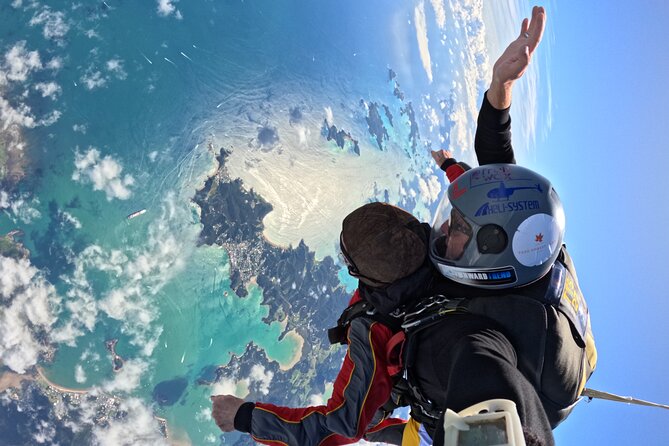
Book it if you want the classic Bay of Islands view with a substantial 40-second freefall, and if you can keep your day flexible. The professional instructor, supplied equipment, multiple times, and pickup options make the practical side fairly straightforward.
Before paying, confirm your transport, the 100-kilogram limit, the current media prices, and the weather call procedure. Keep your voucher printed, wear closed-toe shoes, and avoid scuba activity in the previous 24 hours.
I would choose this jump for the view as much as the adrenaline. The freefall is intense, but the real sense of place comes afterward, when the parachute opens and the islands, beaches, and blue channels spread beneath you. If that combination appeals to you, the 12,000-foot option is a sensible way to see the Bay of Islands from a remarkable angle.
FAQ
Where does the skydive start?
The meeting point is 182 Wiroa Road, Kerikeri 0293, New Zealand. The activity ends back at the meeting point.
Is pickup available?
Pickup and drop-off are offered from selected central locations in Paihia and Kerikeri. Hotel pickup and drop-off are not generally included.
How high is the jump?
The jump is from 12,000 feet, which is about 3,658 metres.
How long is the freefall?
The freefall lasts about 40 seconds before the parachute opens.
How long should I allow for the activity?
The skydive usually takes about 1.5 hours, but you should allow two to four hours because of weather changes and unexpected aviation requirements.
What is the minimum age?
The minimum age is eight. Anyone under 18 must have signed consent from a parent or guardian.
Is there a weight limit?
Yes. The strict maximum weight is 100 kilograms. Contact the operator beforehand if you think you may be close to the limit.
Are photos and video included?
No. Souvenir photos and video are available to purchase separately.
Newest jumps around New Zealand
- Queenstown: Ticket for 2 Indoor Skydiving Flights★ 4.4 · 15 reviews
- Tandem Skydive 10,000ft from Franz Josef★ 5.0 · 4 reviews
- Tandem Skydive 13,000ft from Franz Josef★ 4.5 · 16 reviews
- 13,000ft Skydive over Abel Tasman with NZ’s Most Epic Scenery★ 5.0 · 20 reviews
- 10,000ft Skydive over Abel Tasman with NZ’s Most Epic Scenery★ 5.0 · 10 reviews
- Tandem Skydive 16,500ft from Franz Josef★ 5.0 · 19 reviews
- 16,500ft Skydive over Abel Tasman with NZ’s Most Epic Scenery★ 5.0 · 23 reviews
- Tandem Skydive 18,000ft from Franz Josef★ 4.5 · 29 reviews
New Zealand Skydiving, side by side.
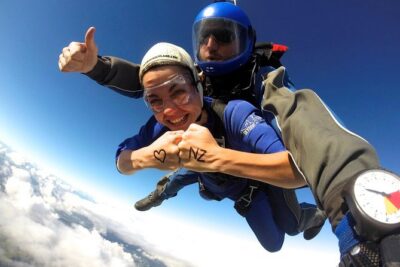
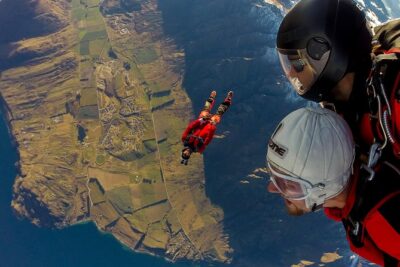
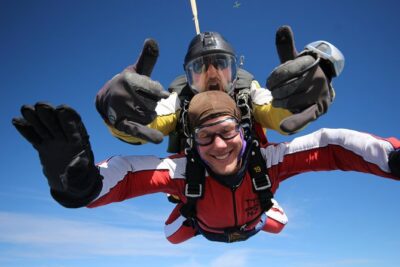
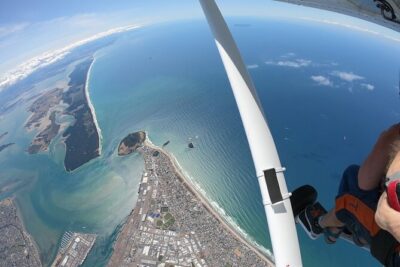
15,000ft Tandem Skydive in Tauranga – Bay of Plenty
Read our review →
Lists this jump appears in