
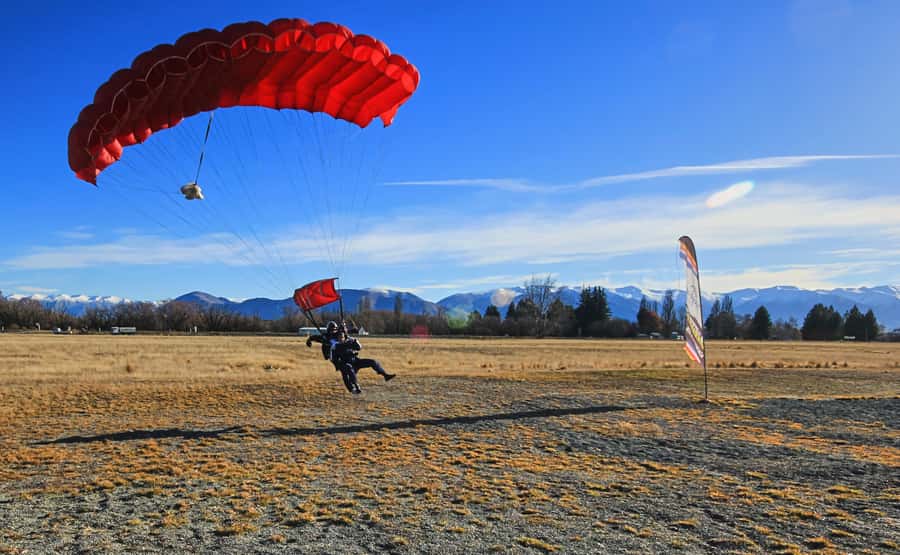
REVIEW · NEW ZEALAND
Skydive Wanaka
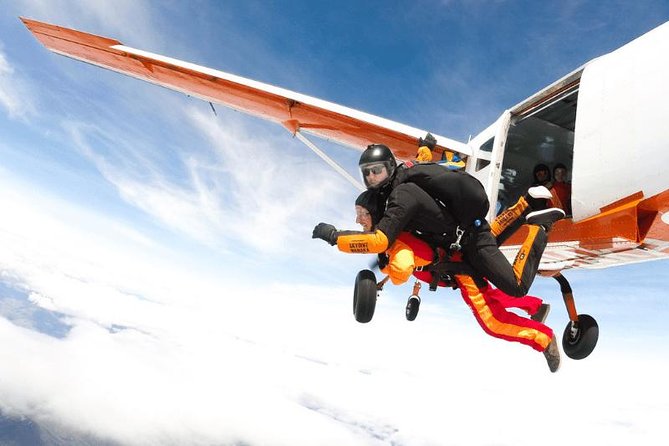
Wanaka’s big thrill begins before you leave the plane. The 20-minute scenic flight takes you above the Southern Alps, with views toward Mt. Cook, Mt. Aspiring, up to six lakes, and the Clutha River. Then you free-fall for up to 60 seconds at speeds near 200 kilometres per hour. It is sightseeing with a very sharp change of pace.
I like the way all safety gear is supplied, so you only need warm, comfortable clothes and closed-toe shoes. I also like the flexible jump times and optional pickup from Wanaka i-SITE, which make it easier to fit this three-hour activity into a busy South Island trip. The main catch is weather: poor conditions can cancel your jump, and photo or video packages cost extra.
Key points to know before you book
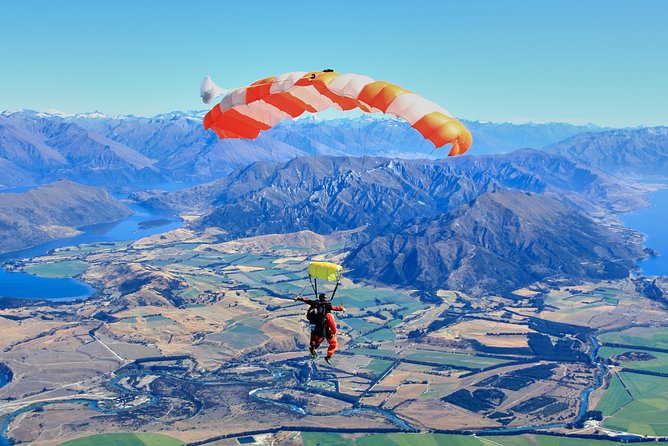
- The flight is part of the attraction: You may see Mt. Cook, Mt. Aspiring, the Southern Alps, several lakes, and the Clutha River before the jump.
- Free-fall lasts up to 60 seconds: Speeds can reach 125 miles per hour, or about 200 kilometres per hour.
- Cuzzy is a memorable instructor name: Feedback specifically praises his calm, encouraging manner and lively interaction.
- Plan on three hours from Wanaka: The drop zone is at Wanaka Airport, about 10 minutes from central Wanaka.
- Weight rules matter: Anyone over 95 kilograms needs an assessment, with surcharges beginning at NZ$50.
- Your media package is extra: Photos and video are available to buy, but they are not included in the listed price.
The Wanaka Airport check-in sets the tone
Skydive Wanaka operates from Wanaka Airport, about 10 minutes from central Wanaka. You can make your own way there or use the optional transfer from Wanaka i-SITE at 103 Ardmore Street. The activity finishes back at the meeting point, so allow roughly three hours in total rather than treating this as a quick morning add-on.
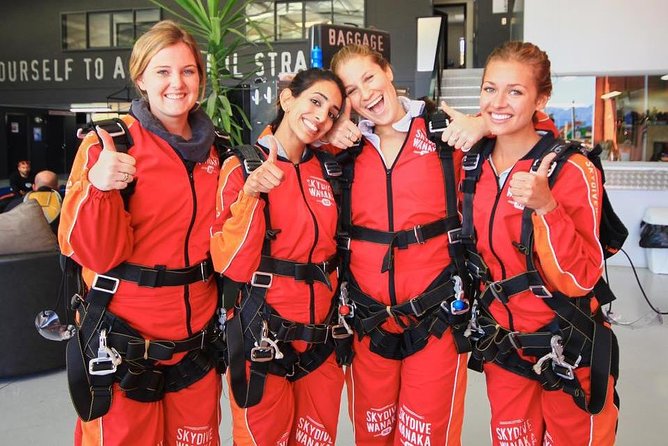
At the drop zone, staff check you in, provide the safety equipment, and prepare you for the jump. You should arrive in warm, comfortable clothing and closed-toe shoes. The company supplies the rest of the required equipment, which keeps packing simple.
The first stage is practical rather than glamorous. You meet your Tandem Master, receive a safety briefing, and get fitted with the harness. This is where a good instructor makes a real difference. Cuzzy is singled out for helping a nervous first-time jumper feel calm, staying engaged, and keeping the mood light. That sort of steady communication matters more than clever jokes when you are about to leave an aircraft.
One piece of feedback also points to an uneven harness-fitting moment before other staff corrected it. I would not treat that as the normal experience, but it is a useful reminder to speak up if anything feels wrong. Your harness should be checked carefully, and you should feel comfortable asking the staff to explain what they are doing.
More Skydives in New Zealand:
- Skydive Auckland
★ 5.0 · 1,516 reviews - NZONE Skydive Queenstown
★ 4.5 · 1,438 reviews - Queenstown: Tandem Skydive Experience
★ 4.8 · 475 reviews
The 20-minute flight is more than a ride to altitude
Once you are ready, you board the aircraft with your Tandem Master. The flight to altitude takes about 20 minutes, giving you time to settle your nerves and look outside before the serious part begins.
This is one of the strongest reasons to choose Wanaka for a tandem jump. You are not simply paying for a short fall from a plane. The flight offers a high view across the Southern Alps and the Central Otago region, with your instructor pointing out notable features along the way.
The named sights include Mt. Cook, Mt. Aspiring, the Southern Alps, up to six lakes, and the Clutha River. The Twin Lakes and the Clutha and Waiau Rivers are also part of the broader view described for the experience. Visibility will shape how much you see, so do not book this expecting a guaranteed postcard view on every day.
The flight also gives you a useful mental break. You can watch the ground shrink, listen to instructions, and take in the scale of the country. If you are nervous, keep your attention on the scenery and the next simple instruction rather than trying to predict the moment the aircraft door opens.
The jump delivers a full minute of controlled chaos
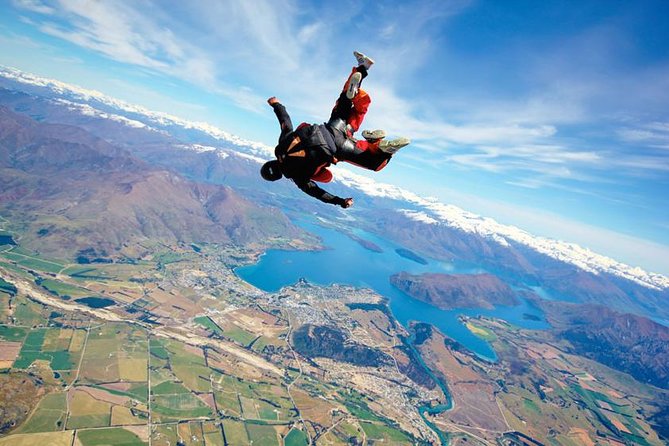
At altitude, the door opens and the tandem jump begins. Free-fall can last up to 60 seconds, with speeds reaching about 125 miles per hour, or 200 kilometres per hour.
That first period is intense. You will feel strong wind and rapid movement, but your Tandem Master controls the technical side of the jump. Keep your eyes open if you can. The point is not only to get through the experience, but also to see the country below you.
The duration depends on the jump height selected. Feedback refers to both 12,000-foot and 15,000-foot jumps, with the longer option producing more free-fall time. The supplied details do not set out a full price comparison between those choices, so confirm the exact altitude and any cost difference when booking.
After the free-fall, the parachute opens and the pace changes completely. You then have time to look around while descending gently toward the landing area. The contrast is part of the appeal: a minute of speed followed by a slower return with a broad view of Wanaka and the surrounding mountains.
Your instructor may also guide the parachute through turns. One piece of feedback enjoyed the tight turns, while another person may prefer a calmer descent. If you are prone to motion sickness or simply want to keep the landing gentle, tell your Tandem Master what you need.
Landing and media packages
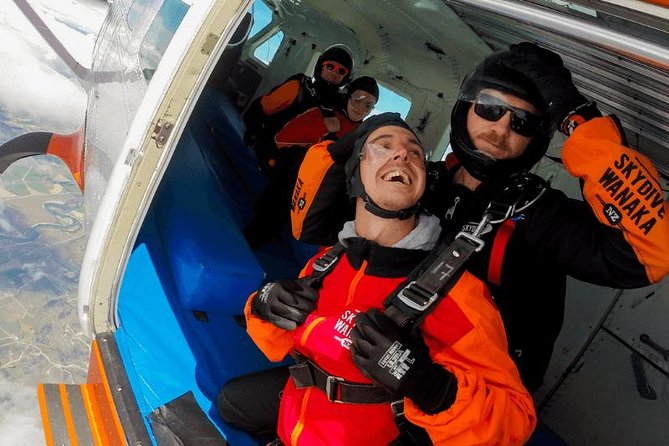
After landing, you can celebrate the achievement while waiting for your edited photos and video if you purchase a media package. Photo and video options are not included in the listed price of $222.79 per person, and one customer considered the photo option expensive.
This is worth thinking through before you arrive. If this is a once-in-a-lifetime jump, recorded footage may be important to you. If you are mainly paying for the sensation and the views, the additional cost may feel less worthwhile. The experience also offers an external filmer and handheld footage options, according to the feedback, but the exact packages and prices should be confirmed directly.
Merchandise, including T-shirts and sunglasses, is also available for purchase. It is optional and has no effect on the jump itself.
Same sky, a different way down:
- Lake Taupo 12,000-Foot Tandem Skydiving
★ 5.0 · 359 reviews - Tandem Skydive Experience in Taupo
★ 5.0 · 324 reviews - 15,000ft Tandem Skydive in Tauranga – Bay of Plenty
★ 5.0 · 305 reviews - Bay of Islands: 12,000ft Skydive
★ 5.0 · 253 reviews
What the $222.79 price really covers
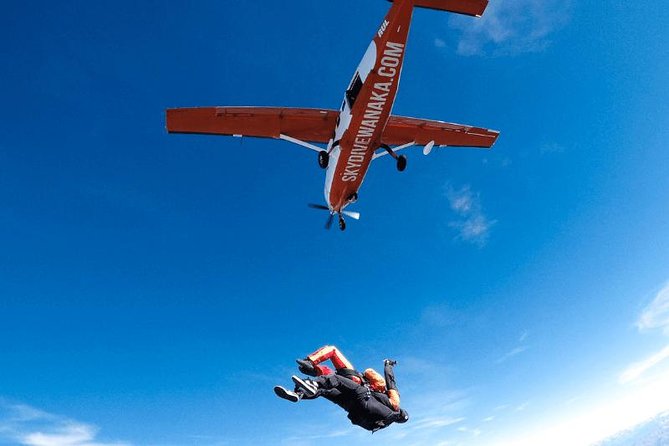
At $222.79 per person, the listed price covers the tandem skydive, the safety briefing, the experienced Jump Master, and the required safety equipment. It also includes the scenic flight and the jump itself, which makes the price easier to assess than a basic transport or sightseeing ticket.
I see the value in the combination of three separate elements: a guided flight over the mountains, a high-speed free-fall, and a parachute descent with a trained professional. You are also paying for the aircraft operation, safety systems, staff, and time at the drop zone. This is a major activity rather than a casual stop between meals.
The price becomes less attractive if you want photos and video, since those are extra. Weight surcharges can also change the final amount. People from 95 to 104.9 kilograms pay an additional $50, those from 105 to 114.9 kilograms pay $75 extra, and anyone at 115 kilograms or more pays $100 extra, subject to assessment and check-in payment.
I would budget for the possible media cost and check the altitude option before making a final decision. For many people, the memory is worth more than the base price suggests. For others, a scenic flight without the jump may offer better value.
Weather, timing, and the three-hour commitment
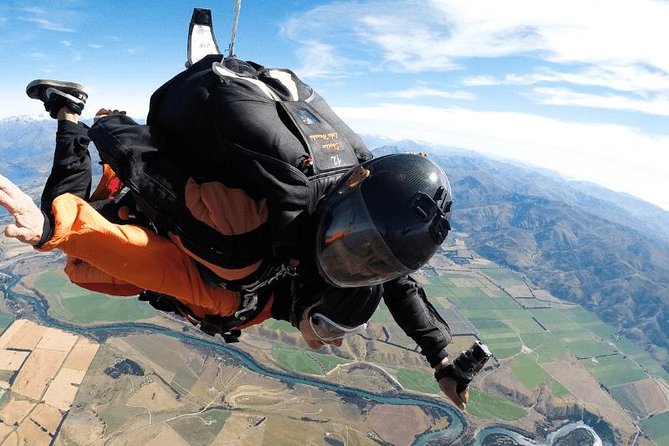
You need good weather for this activity. If conditions force a cancellation, you can choose another date or receive a full refund. This is helpful, but it still means you should avoid putting the jump on the last possible day of your New Zealand trip.
Flexible jump times are useful because Wanaka itineraries often include hikes, lake activities, and long drives. Still, a three-hour return trip from Wanaka needs breathing room. Delays can happen when weather changes, aircraft schedules shift, or the operation needs to move several people through the process.
The maximum group size is 18 people. That does not mean every person will be in the same aircraft or at the same point in the process, but it gives you a sense of the operation’s scale. You should expect a structured activity with check-in, fitting, briefing, flight, jump, landing, and media collection rather than an instant turn-around.
Free cancellation is available up to 24 hours before the start time. Changes or cancellations inside that 24-hour window are not accepted for a refund. The cut-off uses local time, so check the clock carefully if you are arranging this from another country.
Who will get the most from this experience
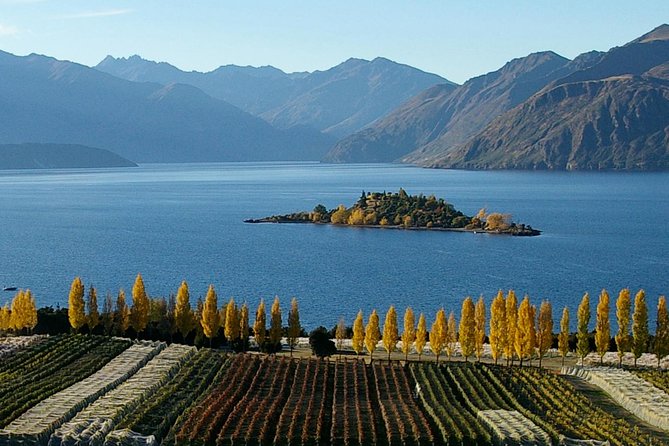
This suits a first-time jumper as well as someone with previous experience. The tandem format means you are paired with a certified Tandem Master, while the safety briefing and supplied equipment keep the process accessible to beginners.
You should choose it if you want a major thrill with a strong sightseeing element. The scenic flight is especially valuable if you want to see the Southern Alps from above but also want the physical excitement of free-fall.
It may not suit you if you have heart complaints, back problems, or are pregnant. The activity is not recommended in those cases. All participants must weigh at least 30 kilograms and be large enough to fit safely into the harness.
If you are under 18, an adult must be onsite to sign the waiver. Service animals are allowed, and most people can participate, subject to the safety and weight requirements.
Anyone over 95 kilograms should deal with the weight rules before booking rather than waiting for check-in. A Tandem Master makes the final assessment at the drop zone, and the extra charge is payable there.
Small details that can make the day easier
Wear warm layers. The plane and altitude can feel cold, even if Wanaka is pleasant at ground level. Closed-toe shoes are required, and loose or uncomfortable clothing will not help when you are wearing a harness.
Leave room in your schedule after the jump. You may want time to collect your edited media, buy a small souvenir, or simply sit for a moment after the adrenaline fades. The activity ends back at the meeting point, which makes it easy to continue your day from Wanaka i-SITE.
If you are nervous, tell your instructor early. The strongest feedback focuses on staff who were friendly, professional, and reassuring. Cuzzy is praised for keeping a first jump calm and engaging, and that is exactly the kind of instructor presence you want.
Do not assume every jump will run on time in poor weather. The refund and rescheduling policy protects you financially, but it cannot give you back a tight connection or a fixed departure. Keep this activity away from your final travel day if possible.
Should you book Skydive Wanaka?
Book it if you want one of New Zealand’s biggest thrills paired with a scenic look at the Southern Alps. The mountain flight, up-to-60-second free-fall, and gentle parachute descent give the experience more variety than a simple adrenaline hit.
I would especially recommend it for first-timers who want a professional tandem setup and for anyone who values the view as much as the jump. The 91 percent recommendation rate and 4.6 rating point to a generally strong experience, with repeated praise for friendly staff, smooth organization, and instructors who help nervous people relax.
Think twice if you have a tight schedule, need a guaranteed weather window, or dislike extra costs for photos and video. Check the jump height, media prices, weight surcharge, and weather plan before paying. If those details work for you, Skydive Wanaka is a bold and memorable way to see Wanaka from above.
FAQ
Where does Skydive Wanaka begin?
The activity begins at Skydive Wanaka’s drop zone at Wanaka Airport, about 10 minutes from central Wanaka. The listed meeting point is Wanaka i-SITE Visitor Information Centre at 103 Ardmore Street.
Is pickup available from Wanaka?
Yes. Optional transfers from Wanaka i-SITE are available.
How long does the experience take?
Allow about three hours for the return trip from Wanaka, including check-in, equipment fitting, the scenic flight, the jump, landing, and time for media collection.
How long is the scenic flight?
The flight to altitude takes about 20 minutes.
How long is the free-fall?
Free-fall lasts for up to 60 seconds, depending on the jump height.
How fast do you fall?
Speeds can reach up to 125 miles per hour, or about 200 kilometres per hour.
What should I wear?
Wear warm, comfortable clothing and closed-toe shoes. All required safety equipment is provided.
Are photos and videos included?
No. Photo and video packages on USB are available to purchase separately.
Are there weight limits?
The minimum weight is 30 kilograms, and each passenger must fit safely into the harness. Anyone over 95 kilograms needs a Tandem Master assessment and may pay a surcharge.
What happens if the weather is poor?
If the activity is canceled because of poor weather, you can choose another date or receive a full refund.
Newest jumps around New Zealand
- Queenstown: Ticket for 2 Indoor Skydiving Flights★ 4.4 · 15 reviews
- Tandem Skydive 10,000ft from Franz Josef★ 5.0 · 4 reviews
- Tandem Skydive 13,000ft from Franz Josef★ 4.5 · 16 reviews
- 13,000ft Skydive over Abel Tasman with NZ’s Most Epic Scenery★ 5.0 · 20 reviews
- 10,000ft Skydive over Abel Tasman with NZ’s Most Epic Scenery★ 5.0 · 10 reviews
- Tandem Skydive 16,500ft from Franz Josef★ 5.0 · 19 reviews
- 16,500ft Skydive over Abel Tasman with NZ’s Most Epic Scenery★ 5.0 · 23 reviews
- Tandem Skydive 18,000ft from Franz Josef★ 4.5 · 29 reviews
New Zealand Skydiving, side by side.
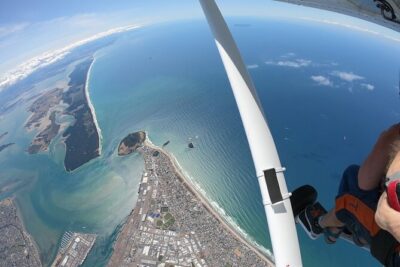
15,000ft Tandem Skydive in Tauranga – Bay of Plenty
Read our review →
Lists this jump appears in